Buy New
-
To see product details, add this item to your cart.
Ships from: Amazon.com Sold by: Amazon.com
Used - Very Good
-
To see product details, add this item to your cart.
FREE Returns
Return this item for free
We offer easy, convenient returns with at least one free return option: no shipping charges. All returns must comply with our returns policy.
Learn more about free returns. How to return the item? - Go to your orders and start the return
- Select your preferred free shipping option
- Drop off and leave!
Ships from: Amazon Sold by: iMaxios
Return this item for free
We offer easy, convenient returns with at least one free return option: no shipping charges. All returns must comply with our returns policy.
Learn more about free returns.- Go to your orders and start the return
- Select your preferred free shipping option
- Drop off and leave!
Download the free Kindle app and start reading Kindle books instantly on your smartphone, tablet, or computer - no Kindle device required.
Read instantly on your browser with Kindle for Web.
Using your mobile phone camera - scan the code below and download the Kindle app.
Follow the author
OK
Artificial Intelligence in Finance: A Python-Based Guide
Purchase options and add-ons
The widespread adoption of AI and machine learning is revolutionizing many industries today. Once these technologies are combined with the programmatic availability of historical and real-time financial data, the financial industry will also change fundamentally. With this practical book, you'll learn how to use AI and machine learning to discover statistical inefficiencies in financial markets and exploit them through algorithmic trading.
Author Yves Hilpisch shows practitioners, students, and academics in both finance and data science practical ways to apply machine learning and deep learning algorithms to finance. Thanks to lots of self-contained Python examples, you'll be able to replicate all results and figures presented in the book.
In five parts, this guide helps you:
- Learn central notions and algorithms from AI, including recent breakthroughs on the way to artificial general intelligence (AGI) and superintelligence (SI)
- Understand why data-driven finance, AI, and machine learning will have a lasting impact on financial theory and practice
- Apply neural networks and reinforcement learning to discover statistical inefficiencies in financial markets
- Identify and exploit economic inefficiencies through backtesting and algorithmic trading--the automated execution of trading strategies
- Understand how AI will influence the competitive dynamics in the financial industry and what the potential emergence of a financial singularity might bring about
- ISBN-101492055433
- ISBN-13978-1492055433
- Edition1st
- PublisherO'Reilly Media
- Publication dateNovember 17, 2020
- LanguageEnglish
- Dimensions7 x 0.96 x 9.19 inches
- Print length475 pages
Discover the latest buzz-worthy books, from mysteries and romance to humor and nonfiction. Explore more
Frequently bought together

Customers who viewed this item also viewed
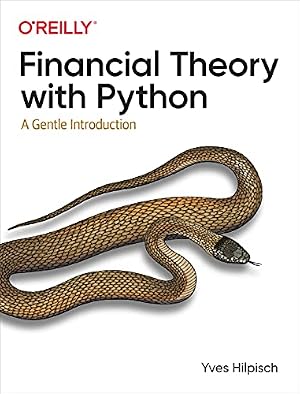
- Financial Theory with Python: A Gentle IntroductionPaperbackFREE Shipping on orders over $35 shipped by AmazonGet it as soon as Sunday, Sep 20Only 10 left in stock (more on the way).
- Deep Learning for Finance: Creating Machine & Deep Learning Models for Trading in PythonPaperbackFREE Shipping by AmazonGet it as soon as Sunday, Sep 20Only 15 left in stock (more on the way).
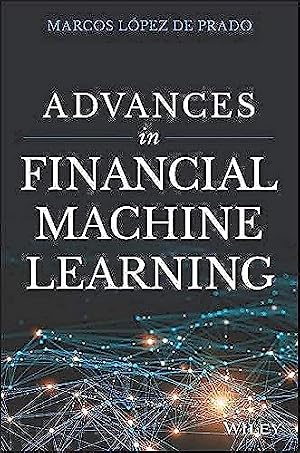
- Advances in Financial Machine LearningHardcoverFREE Shipping on orders over $35 shipped by AmazonGet it as soon as Sunday, Sep 20
- Financial Data Engineering: Design and Build Data-Driven Financial ProductsPaperbackFREE Shipping by AmazonGet it as soon as Sunday, Sep 20Only 15 left in stock (more on the way).
- AI Engineering: Building Applications with Foundation ModelsPaperbackFREE Shipping by AmazonGet it as soon as Sunday, Sep 20
Customers also bought or read
- Python for Algorithmic Trading: From Idea to Cloud Deployment
Paperback$40.12$40.12FREE delivery Sun, Sep 20 - Machine Learning for Algorithmic Trading: Predictive models to extract signals from market and alternative data for systematic trading strategies with Python
Paperback$47.60$47.60FREE delivery Mon, Sep 21 - Probabilistic Machine Learning for Finance and Investing: A Primer to Generative AI with Python
Paperback$50.67$50.67FREE delivery Sun, Sep 20 - Python for Finance Cookbook: Over 80 powerful recipes for effective financial data analysis, 2nd Edition
Paperback$37.98$37.98FREE delivery Mon, Sep 21 - Deep Learning for Finance: Creating Machine & Deep Learning Models for Trading in Python
Paperback$40.49$40.49FREE delivery Sun, Sep 20 - Python for Algorithmic Trading Cookbook: Recipes for designing, building, and deploying algorithmic trading strategies with Python
Paperback$44.99$44.99FREE delivery Mon, Sep 21 - Fluent Python: Clear, Concise, and Effective Programming
Paperback$43.99$43.99FREE delivery Sun, Sep 20 - Machine Learning and Data Science Blueprints for Finance: From Building Trading Strategies to Robo-Advisors Using Python
Paperback$44.00$44.00FREE delivery Mon, Sep 21 - Machine Learning for Financial Risk Management with Python: Algorithms for Modeling Risk
Paperback$49.99$49.99FREE delivery Sun, Sep 20 - Python for Data Analysis: Data Wrangling with pandas, NumPy, and Jupyter
Paperback$43.99$43.99FREE delivery Oct 1 - 16 - Reinforcement Learning for Finance: A Python-Based Introduction
Paperback$51.98$51.98FREE delivery Sun, Sep 20 - Hands-On Machine Learning with Scikit-Learn, Keras, and TensorFlow: Concepts, Tools, and Techniques to Build Intelligent Systems
Paperback$49.50$49.50FREE delivery Mon, Sep 21 - Designing Machine Learning Systems: An Iterative Process for Production-Ready Applications
Paperback$40.00$40.00FREE delivery Sun, Sep 20 - Hands-On Large Language Models: Language Understanding and Generation
Paperback$37.68$37.68FREE delivery Mon, Sep 21 - Machine Learning with PyTorch and Scikit-Learn: Develop machine learning and deep learning models with Python#1 Best SellerSpeech & Audio Processing
Paperback$36.05$36.05FREE delivery Sun, Sep 20 - Mastering Financial Pattern Recognition: Finding and Back-Testing Candlestick Patterns with Python
Paperback$53.35$53.35FREE delivery Tue, Sep 22 - Investing for Programmers: Understanding markets through data and code
Paperback$52.40$52.40FREE delivery Mon, Sep 21 - Mathematics of Machine Learning: Master linear algebra, calculus, and probability for machine learning
Paperback$44.30$44.30FREE delivery Mon, Sep 21 - AI-Driven Finance: A Toolkit for Real-World Transformation in the Age of Automation and Lean
Paperback$24.99$24.99Delivery Mon, Sep 21 - Web Scraping with Python: Data Extraction from the Modern Web
Paperback$44.94$44.94FREE delivery Sun, Sep 20 - AI Engineering: Building Applications with Foundation Models#1 Best SellerEnterprise Applications
Paperback$52.40$52.40FREE delivery Sun, Sep 20 - Building Applications with AI Agents: Designing and Implementing Multiagent Systems
Paperback$56.44$56.44FREE delivery Sun, Sep 20 - Deep Reinforcement Learning Hands-On: A practical and easy-to-follow guide to RL from Q-learning and DQNs to PPO and RLHF
Paperback$32.75$32.75Delivery Mon, Sep 21 - Python Data Science Handbook: Essential Tools for Working with Data
Paperback$44.18$44.18FREE delivery Sun, Sep 20
From the brand
-
Start learning with O'Reilly
-
Explore more finance resources
-
Blockchain & Cryptocurrency
-
More From O'Reilly
-
Sharing the knowledge of experts
O'Reilly's mission is to change the world by sharing the knowledge of innovators. For over 40 years, we've inspired companies and individuals to do new things (and do them better) by providing the skills and understanding that are necessary for success.
Our customers are hungry to build the innovations that propel the world forward. And we help them do just that.
From the Publisher
From the Preface
The application of AI to financial trading is still a nascent field, although at the time of writing there are a number of other books available that cover this topic to some extent. Many of these publications, however, fail to show what it means to economically exploit statistical inefficiencies.
Some hedge funds already claim to exclusively rely on machine learning to manage their investors’ capital. A prominent example is The Voleon Group, a hedge fund that reported more than six billion dollars (USD) in assets under management at the end of 2019 (see Lee and Karsh 2020). The difficulty of relying on machine learning to outsmart the financial markets is reflected in the fund’s performance of 7% for 2019, a year during which the S&P 500 stock index rose by almost 30%.
This book is based on years of practical experience in developing, backtesting, and deploying AI-powered algorithmic trading strategies. The approaches and examples presented are mostly based on my own research since the field is, by nature, not only nascent, but also rather secretive.
The exposition and the style throughout this book are relentlessly practical, and in many instances the concrete examples are lacking proper theoretical support and/or comprehensive empirical evidence. This book even presents some applications and examples that might be vehemently criticized by experts in finance and/or machine learning.
For example, some experts in machine and deep learning, such as François Chollet (2017), outright doubt that prediction in financial markets is possible. Certain experts in finance, such as Robert Shiller (2015), doubt that there will ever be something like a financial singularity. Others active at the intersection of the two domains, such as Marcos López de Prado (2018), argue that the use of machine learning for financial trading and investing requires an industrial-scale effort with large teams and huge budgets.
This book does not try to provide a balanced view of or a comprehensive set of references for all the topics covered. The presentation is driven by the personal opinions and experiences of the author, as well as by practical considerations when providing concrete examples and Python code. Many of the examples are also chosen and tweaked to drive home certain points or to show encouraging results. Therefore, it can certainly be argued that results from many examples presented in the book suffer from data snooping and overfitting (for a discussion of these topics, see Hilpisch 2020, ch. 4).
The major goal of this book is to empower the reader to use the code examples in the book as a framework to explore the exciting space of AI applied to financial trading. To achieve this goal, the book relies throughout on a number of simplifying assumptions and primarily on financial time series data and features derived directly from such data. In practical applications, a restriction to financial time series data is of course not necessary—a great variety of other types of data and data sources could be used as well. This book’s approach to deriving features implicitly assumes that financial time series and features derived from them show patterns that, at least to some extent, persist over time and that can be used to predict the direction of future movements.
Against this background, all examples and code presented in this book are technical and illustrative in nature and do not represent any recommendation or investment advice.
For those who want to deploy approaches and algorithmic trading strategies presented in this book, my book Python for Algorithmic Trading: From Idea to Cloud Deployment (O’Reilly) provides more process-oriented and technical details. The two books complement each other in many respects. For readers who are just getting started with Python for finance or who are seeking a refresher and reference manual, my book Python for Finance: Mastering Data-Driven Finance (O’Reilly) covers a comprehensive set of important topics and fundamental skills in Python as applied to the financial domain.
Financial Theory with Python: A Gentle Introduction
|
Python for Finance: Mastering Data-Driven Finance
|
Python for Algorithmic Trading: From Idea to Cloud Deployment
|
Artificial Intelligence in Finance: A Python-Based Guide
|
Reinforcement Learning for Finance: A Python-Based Introduction
|
|
|---|---|---|---|---|---|
| Customer Reviews |
4.3 out of 5 stars 38
|
4.6 out of 5 stars 323
|
4.4 out of 5 stars 151
|
4.5 out of 5 stars 66
|
5.0 out of 5 stars 4
|
| Also by Yves Hilpisch | A Gentle Introduction | Mastering Data-Driven Finance | From Idea to Cloud Deployment | A Python-Based Guide | A Python-Based Introduction |
Editorial Reviews
About the Author
Product details
- Publisher : O'Reilly Media
- Publication date : November 17, 2020
- Edition : 1st
- Language : English
- Print length : 475 pages
- ISBN-10 : 1492055433
- ISBN-13 : 978-1492055433
- Item Weight : 2.31 pounds
- Dimensions : 7 x 0.96 x 9.19 inches
- Best Sellers Rank: #979,763 in Books (See Top 100 in Books)
- #198 in Data Modeling & Design (Books)
- #547 in Python Programming
- #701 in Corporate Finance (Books)
- Customer Reviews:
About the author

Dr. Yves J. Hilpisch is founder and CEO of The Python Quants (http://tpq.io), a group focusing on the use of open source technologies for financial data science, artificial intelligence, algorithmic trading, and computational finance. He is also the founder and CEO of The AI Machine (http://aimachine.io), a company focused on AI-powered algorithmic trading based on a proprietary strategy execution platform.
Yves has a Diploma in Business Administration, a Ph.D. in Mathematical Finance and is Adjunct Professor for Computational Finance.
Yves is the author of five books (https://home.tpq.io/books):
* Artificial Intelligence in Finance (O’Reilly, forthcoming)
* Python for Algorithmic Trading (O’Reilly, forthcoming)
* Python for Finance (2018, 2nd ed., O’Reilly)
* Listed Volatility and Variance Derivatives (2017, Wiley Finance)
* Derivatives Analytics with Python (2015, Wiley Finance)
Yves is the director of the first online training program leading to University Certificates in Python for Algorithmic Trading (https://home.tpq.io/certificates/pyalgo) and Computational Finance (https://home.tpq.io/certificates/compfin). He also lectures on computational finance, machine learning, and algorithmic trading at the CQF Program (http://cqf.com).
Yves is the originator of the financial analytics library DX Analytics (http://dx-analytics.com) and organizes Meetup group events, conferences, and bootcamps about Python, artificial intelligence and algorithmic trading in London (http://pqf.tpq.io), New York (http://aifat.tpq.io), Frankfurt, Berlin, and Paris. He has given keynote speeches at technology conferences in the United States, Europe, and Asia.