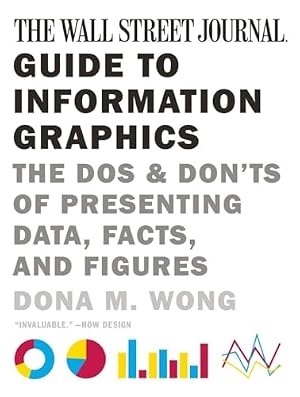
Sweet Talk
Paternalism and Collective Action in North-South Trade Relations
By J.P. SinghSTANFORD UNIVERSITY PRESS
Copyright © 2017 Board of Trustees of the Leland Stanford Junior University
All rights reserved.
ISBN: 978-1-5036-0104-8
Contents
List of Illustrations,
Preface,
List of Acronyms,
1. Introduction: The Subtext of North–South Relations,
PART I: Understanding History,
2. Who Is Served by Paternalism?,
3. GATT and the Developing World before the Uruguay Round,
PART II: The Uruguay Round and After,
4. Unequal Partners in Merchandise Trade,
5. An Uneven Playing Field in Agricultural Negotiations,
6. Big Disparities in Services and Intellectual Property,
7. Conclusion: The End of Sweet Talk,
Appendix A: Node Classification Descriptions for the U.S. Tone/Sentiment toward Trading Partners,
Appendix B: Codebook and Data Sources,
Notes,
References,
Index,
CHAPTER 1Introduction
The Subtext of North–South Relations
When asked for his views on Western Civilization, Mahatma Gandhi is famously supposed to have said it would be a good idea. Poor countries are equally cynical about western governments' commitment to free trade. With good reason: America and Europe are forever lecturing developing countries about the need to open their markets, yet they do their best to keep out many poor-country exports.
The Economist, "White Man's Shame," September 23, 1999
THIS book explains the degree of reciprocity in North–South trade relations. Specifically, it explains the lack of reciprocal tariff and non-tariff concessions toward the Global South and the presence of a small amount of nonreciprocal trade concessions. These meager concessions are analyzed in the context of the postwar rhetoric of benevolence toward the Global South and the West's exhortations to them to join the global liberal order.
The argument situates the lack of reciprocal concessions in the Global North's paternalism, defined here as a patronizing discourse resulting from a position of economic and political strength and cultural distance from the Global South. This paternalism can be historically traced back to colonial-era racism. Nevertheless, we would expect paternalistic countries, with a discourse laden with benevolence, to make trade concessions. Unfortunately, the paternalistic countries do not do so. The study employs mixed methods, two original data sets, and findings at various levels to validate its central supposition on the negative correlation between paternalism and trade concessions. The following pages examine every major issue in North–South trade: agriculture, manufacturing, services trade, and intellectual property. The book analyzes these issues at various levels: macroquantitative studies to provide a broad picture; case study methods for historical analysis; microcases such as sugar, cotton, textiles, and high-tech outsourcing that allow for granular process tracing. One of the original data sets is a paternalistic strength index (PSI), which measures the economic, political, and cultural distance of the Global South from the Global North. This index confirms that paternalistic strength is negatively related to trade concessions. At multiple levels and in multiple issue areas, the book confirms that paternalism is not benevolent; it does not result in trade concessions to the paternalized.
We would expect that sweet-talking benevolent or paternalistic countries would make trade concessions to the Global South. We would expect that there would be some truth in the benevolent rhetoric about the concessions the Global North promises to make. This turns out to be a benevolent lie. The second original data set codes 1,925 pages of press releases from the U.S. Trade Representative's Office in the 1982–1993 period, roughly equivalent to the beginnings and end of the Uruguay Round of multilateral trade negotiations. It finds that 93 percent of the paternalistic references, mostly about U.S. benevolence in trade policy, were toward the developing world. Yet there is very little to show in terms of meaningful concessions to correlate with this moral rhetoric.
The Global South's negotiation strengths explain the presence of even the minimal trade concessions, including nonreciprocal trade concessions that the developing world receives. Negotiation factors explored in this book include coalition building, multilateralism, and the ability of the Global South to leverage its trade portfolios for obtaining concessions. Through multiple issue areas at multiple levels, the book validates that the few trade concessions the developing world receives result from its negotiation advantages and not paternalistic benevolence.
This chapter and the next make a broad case for the lack of reciprocity and the presence of cultural preferences traced to historical racism in international trade relations. The subsequent chapters provide the empirical evidence. This introduction explains the argument in brief but first provides the reasoning against the main counterfactuals.
The Departures
Sweet Talk's findings are surprising and counterintuitive. Strategic trade theory and related concepts provide the counterarguments closest to the theoretical leanings in this book. These are examined here, although others follow later.
Strategic trade analysts would accept the case for lack of concessions but explain it differently as the pursuit of strategic interests in trade (and security policy). Strategic trade theory predicts that trade concessions (or an open trade policy) are contingent on utility maximization strategies that employ specific import restrictions and export incentives, sometimes linked to a conception of the national interest. We can expect prosperous states in the Global North to negotiate reciprocal concessions with Global South countries with large markets in seeking increasing returns and benevolently offer reciprocal or nonreciprocal trade access, as needed, only to those with small markets. Empirically, neither proposition is found to be valid in this book. The United States and the European Union (EU) now resist reciprocal trade concessions to Brazil, China, and India at the multilateral level and exclude them altogether in preferential trade agreements (PTAs). This book also provides some evidence that the Global North may have sought to "punish" trade coalitions such as the G10 to which Brazil and India belonged in the Uruguay Round by making even smaller concessions to them than to the rest of the developing world. In the PTAs with small states, there is no evidence of great power benevolence. The consensus is that PTAs do not offer small states a better deal than those negotiated multilaterally. Both the United States and the EU have squeezed every little concession they could from a small power, whether it is Costa Rica, Morocco, or Brunei.
The security variant of the strategic trade explanation would predict trade rewards for allies and benevolence for small states that are important for Global North's strategic interests (Gowa and Mansfield 1993, 2004; Mansfield and Bronson 1997). Again, these are empirically dubious propositions. At the macroquantitative level, we find some evidence that the Global North might reward countries that are strategic allies, as measured through the UN General Assembly Strategic Index (Voeten 2015). However, when these data are parsed further into countries that are developing versus developed, the affinity index predicts concessions only to prosperous allies, mostly in the Global North (Chapter 7). David Lake's (2009) supposition regarding benefits to the subordinate states as the price to pay for the global order provided from superpowers also does not hold for North–South trade reciprocity.
There are also many examples in this book where the United States cast aside its strategic interests to not make any concessions or, worse, withdraw concessions to strategically important small countries. The inability of the affinity index to predict trade concessions to allies in the Global South is an instance at the macrolevel. At a microlevel, one example may be sufficient for now. In the 1980s, the U.S. President Ronald Reagan was trying to check against communist insurgency with the Caribbean Basin Initiative (CBI) launched in 1984. However, in 1987 the Reagan administration reduced the duty-free sugar quotas from the Caribbean from 2.7 million tons to 1.0 million tons, in responding to its sugar lobby, which led to a loss of 350,000 jobs and foreign exchange shortages in the Caribbean, which is counter to the logic of thwarting communism. Using the logic of the theory-infirming case study method, if the strategic interest argument does not hold in this most likely case of checking for communist insurgency under President Reagan, then it is unlikely to hold elsewhere (Eckstein 1975; Odell 2001). There are many "elsewheres" described in the book.
A few findings in this book also deepen insights of strategic trade theory in showing how trade preferences may be culturally constituted (Mansfield and Mutz 2009). There are many products from the developing world — agriculture or textiles, for example — that would constitute a large share of the global trade volumes from the Global South if reciprocal concessions were allowed. We find that the developed world maintains protections on these products, thereby depriving the developing world the benefits of trade and economic advantages to consumers in the developed world. Here the book's findings may be consistent with a version of strategic trade policy that inefficiently rewards domestic producers (Grossman and Helpman 2002; Reinert 2008). The historical evidence presented in this book, in the protected agriculture and textile producers in these countries, shows the power of open deceit and manipulation, at times with the support of political leaders, and racist arguments against the developing world to keep out their exports. This book, therefore, veers toward culturally defined trade preferences while also showing that many models of strategic trade theory that take entrenched opposition of domestic trade interests are insufficient in explaining the puzzle posed in this book.
Finally, one might argue that the Global North's concessions toward the South are in the form of nonreciprocal preferences, such as that of sugar just mentioned. However, these concessions are very small, less than 2 percent of the trade volumes for the United States and the EU, and they result from the Global South's collective advocacy and not the Global North's benevolence. The story is complicated: The developing world did not initially seek preferences and accepted its provisions begrudgingly. Once the Generalized System of Preferences (GSP) was in place, it produced a system of dependency allowing the Global North to make claims about its benevolence, while restricting meaningful concessions. The book also shows that GSP system is conditional, and the North uses it strategically in another sense: to divide and rule. The 2015 services trade agreement directed at the least developed countries, offering them nonreciprocal market access, is an example. LDCs have miniscule services exports to the developed world, and the initiative for services preferences came from the North, not from the South.
Neither the "sweet talk" of paternalistic benevolence nor a majority of the "straight talk" of strategic trade theory explains the lack of trade concessions to the Global South. Instead the book advances an understanding of culturally constituted paternalistic trade preferences in the Global North, which only marginally include the developing world in the global liberal trading order. Trade concessions the developing world obtains result from its own negotiation advantages.
Other historical explanations — power politics and core–periphery relations — will be debunked in the conclusion and briefly later in this chapter. They fare even worse. There is one exception: The Global North has succeeded in creating dependencies in the South for certain products with preferential access. This is consistent with recent arguments on coercive diplomacy, where resource-rich states can manipulate the weak through trade dependence (Carnegie 2015). In doing so, the North thwarts attempts from developing countries for reciprocal concessions by either rousing dependent states to the cause of preferential access or shepherding the nondependent states toward such policies. Strategic trade theory might predicate that the paternalism that results in such manipulative preferences is in fact a strategic interest to keep out these countries' exports. If so, strategic trade theory's cultural underpinnings are under explored.
Another significant counterfactual is David Lake's (2009) critical realist analysis of the international political order as one characterized by hierarchical relations, rather than anarchy. Lake argues that superpowers such as the United States exercise legitimate authority over the subordinates as an act of social exchange: While benefiting themselves, they provide a legitimate social order. He throws down a gauntlet in his preface: "If others believe that a social contract is an insufficient approach to understanding hierarchy between states, they should develop alternative theories, deduce their implications, and compare the evidence for and against their theory relative to mine" (p. xii). Lake deduces his perspective on authority and domination from above, from the perspective of superpowers. This book posits paternalism and resistance from below, from the perspective of the Global South's "subordinate." For example, Lake's relational model does not allow for any bargaining and negotiation from the South — they are mostly "provided for." The theoretical suppositions and the evidence in this book demonstrate that the social exchange is unjust, possibly racist, and illegitimate in many ways. This does not mean that a social contract does not exist but that it is seriously broken.
Sweet Talk points out the broader issues of economic injustice inherent to North–South trade relations and the social meanings of these interactions. These meanings are important for understanding the longevity and legitimacy of the liberal world order. However, social meanings or cultural origins of trade preferences are important for another immediate reason: They predict North–South trade negotiation outcomes better than extant theory.
Explaining the Puzzle: Reciprocity
Cultural concerns are often missing from scholarly and media perspectives in the West on international trade. The Economist story quoted at the beginning of this chapter, about poor countries' cynical and collective beliefs regarding trade, is a departure. Gandhi references the cultural practices in the West that trumpet its civilization. Understood in the Global South, these historical references to civilization can carry the imprint of paternalism. In the past, they resulted in the North lecturing the South about economic development and making promises in return for adopting its prescribed market-oriented economic policies.
This book narrates a narrow story about trade reciprocity, but the broad meaning of the book's puzzle lies in the cultural context that intersects and departs from the empirical evidence about the developing world and international trade. The intersections provide a happy ending in which middle-income countries of the Global South begin to garner a bigger share of international trade to capture ever-growing shares of traditional and new high-tech services products (Table 1.1). However, this book also elaborates on a tragic story in which the West continually bars the Global South from flourishing in international trade despite exhorting it to participate in the global economy. The South's assigned position: Either accept the deal the North offers or be cast as obstreperous and unwilling. Table 1.1 captures this story for developing countries, whose share of world trade remains slow despite the benevolent "preferential treatment" they have received in trade from the developed world. For the low-income countries (LICs), the share of merchandise exports has declined from an already low figure of 0.7 percent to 0.5 percent. In fact, although high-income countries might claim that their "average tariffs" are low, the low-income countries of the Global South continue to face protectionist barriers for products for which they might claim comparative advantage. This applies to most agricultural commodities and, until 2005, to textiles. Table 1.2 shows that for primary foods (from meat products to oil seeds in column one), although the applied tariffs are low in Organisation for Economic Co-Operation and Development (OECD) countries, the frequency of nontariff barriers is high compared to that in low-income countries. On the other hand, the OECD maintains low tariffs and nontariff barriers (NTBs) for mineral ores and fuels that are crucial for its economies. Although both OECD countries and LICs employ tariffs, the frequency of NTBs on primary foods shows that the North has liberalized much less than the South in these important export products for the developing world.
Two contrasting views frame this book's puzzle regarding reciprocity in the context of the happy and tragic circumstances of trade described in the preceding paragraphs. They obliquely reference the cultural conditions within which international trade takes place. Both deal with the World Trade Organization (WTO) or its prior incarnation, the General Agreement for Tariffs and Trade (GATT), which since 1948 has provided the negotiation forums for crafting the multilateral rules governing international trade. The first view enhances the image of the rule-based system that the WTO offers to note that these rules are inherently fair and result from the moral and ethical concerns of the developed world, in this case mostly the West. Ethan Kapstein (2008) represents this story in writing: The global economy is a hard case for "fairness economics," Kapstein admits, but he seeks to demonstrate that principles rooted in fairness and justice have guided even the strategic considerations of powerful states in framing WTO rules. Great powers make fair propositions because they believe unfair ones would be rejected. Therefore, Kapstein exhorts scholars to move beyond the prisoner's dilemma beggar-thy-neighbor policies in the game theoretic models used for understanding international strategic conduct. As evidence, he cites data that show that the European Union and the United States made far bigger concessions in millions of dollars in tariff cuts than the developing world at the Uruguay Round (Table 1.3). Kapstein's case is partially or wholly corroborated in, and follows from, other findings from negotiation theory and normative concerns in trade policy. Negotiations studies now frequently show that multilateral forums such as the WTO allow the weak to make gains against the strong (Singh 2000; Odell 2006). Studies of normative concerns also show that ethical considerations can guide negotiators (Albin 2001).
(Continues...)Excerpted from Sweet Talk by J.P. Singh. Copyright © 2017 Board of Trustees of the Leland Stanford Junior University. Excerpted by permission of STANFORD UNIVERSITY PRESS.
All rights reserved. No part of this excerpt may be reproduced or reprinted without permission in writing from the publisher.
Excerpts are provided by Dial-A-Book Inc. solely for the personal use of visitors to this web site. 




 Report an issue with this product or seller

![The Economist Numbers Guide 6th Edition: The Essentials of Business Numeracy [Paperback] [Dec 12, 2013] Richard Stutely](https://images-na.ssl-images-amazon.com/images/I/81gVoVj2v0L._AC_UL116_SR116,116_.jpg)

![The Economist Numbers Guide 6th Edition: The Essentials of Business Numeracy [Paperback] [Dec 12, 2013] Richard Stutely](https://images-na.ssl-images-amazon.com/images/I/81gVoVj2v0L._AC_UL165_SR165,165_.jpg)