
Organizations use a variety of solutions in the field of data management to efficiently handle and analyze data. The Data Warehouse and Database Management System are two examples of such systems. Although both systems handle and store data, their functions and task-specific optimizations vary.
Note: While the Data Warehouse is made for evaluating large amounts of data to help in decision-making, the Database Management System is usually used for routine tasks including transactional processing.
What is Database Management System
Database Management System is used in the traditional way of storing and retrieving data. The major task of a database system is to perform query processing. These systems are generally referred to as online transaction processing systems. These systems are used in the day-to-day operations of any organization.
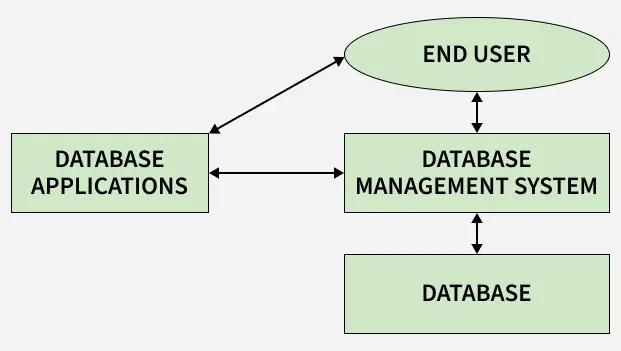
Read more about Database Management System.
What is a Data Warehouse
Data Warehouse is the place where huge amount of data is stored. It is meant for users or knowledge workers in the role of data analysis and decision making. These systems are supposed to organize and present data in different format and different forms in order to serve the need of the specific user for specific purpose. These systems are referred as online analytical processing.
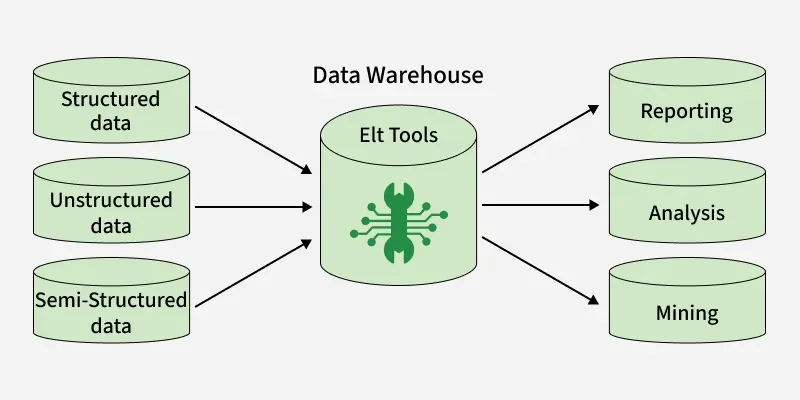
Difference Between Database Management System and Data Warehouse
Feature | Database Management System | Data Warehouse |
|---|---|---|
Purpose | It supports operational processes | It supports analysis and performance reporting. |
Data Handling | Capture and maintain the data | Explore the data |
Data Type | Current data | Multiple years of history |
Date Scope | Data is balanced within the scope of this one system | Data must be integrated and balanced from multiple system. |
Update Frequency | Data is updated when transaction occurs | Data is updated on scheduled processes. |
Data Verification | Data verification occurs when entry is done. | Data verification occurs after the fact. |
Data Size | 100 MB to GB. | 100 GB to TB. |
Data Model | ER based. | Star/Snowflake. |
Orientation | Application oriented. | Subject oriented. |
Data Specificity | Primitive and highly detailed. | Summarized and consolidated. |
Storage Structure | Flat relational | Multidimensional |