
Analog and digital signals are used to transmit information (such as audio or video), usually through electric signals. In digital technology, the translation of information is into a binary format (either 0 or 1), and information is translated into electric pulses of varying amplitude in analog technology.
Digital System
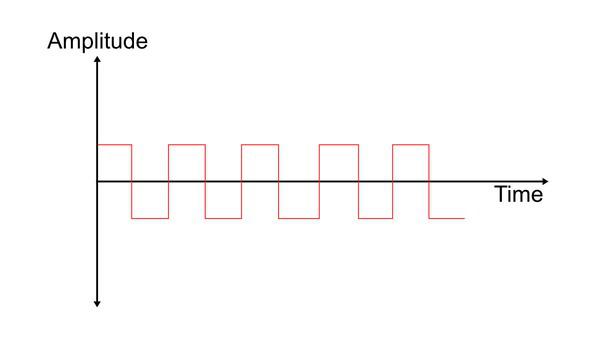
A digital system is one whose signal has a finite number of discrete values. So, the digital system works on digital signals and is limited to binary values 0 or 1. Digital systems are used to process information in digital form. The digital system has wide applications in digital instruments like calculators, computers, Telephones, etc.
- Uses Binary Code: Digital systems use binary code, which is a combination of zeros and ones, to represent information.
- Accuracy: Digital systems are more accurate than analog systems because the information is represented in a precise and consistent manner.
- Processing Speed: Digital systems are capable of processing large amounts of data quickly and accurately.
- Noise Immunity: Digital systems are immune to noise and interference, which means that the transmitted information is less likely to be corrupted.
- Scalable: Digital Systems are easy to scale up and scale down as needed by adding memory and integrating new components without redesigning the whole structure.
- Storage Capacity: As a digital system uses 0 and 1 for transmitting data, it stores data in memory very efficiently and accurately
Analog System
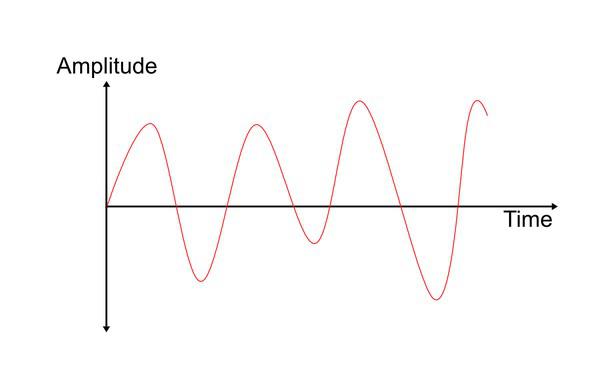
Analog system is one that uses continous time signal or analog signal which is a sinusoidal waveform. Analog system transmits the output in their raw form reducing the time of translation. The amplitude of the signal varies continuously with the time. Analog signals are used to represent sound, temperature, light intensity etc.
- Uses Continuous Signals: Analog systems use continuous signals to represent information, such as electrical voltages or sound waves.
- Real-World Representation: Analog systems are better suited for representing real-world phenomena such as sound and light, which are continuous in nature.
- Smooth Transitions: Analog systems provide smooth and continuous transitions between different values, which can be important in certain applications such as music or video.
- Complexity: Analog systems can be more complex than digital systems due to the need for additional circuitry to process and transmit the signals.
Similarities Between Digital and Analog Systems
- It can be used to process and transmit information.
- Used in combination with each other to achieve goals.
- Requires some level of circuitry or hardware to function.
- Systems use signals to represent and carry information.
- Both require power supply to operate properly.
- Can be affected by noise and interference during signal transmission.
- Both can be used in a variety of applications such as audio, video, and telecommunications.
Digital System vs Analog System
| Feature | Analog System | Digital System |
|---|---|---|
| Signal | Analog signal represents physical measurements. | Digital signals are discrete and generated by digital modulation. |
| Waves | Sine Waves | Square Waves |
| Representation | Continuous range of values to represent information | Uses discrete values to represent information |
| Technology | Records waveforms as they are. | Samples analog waveforms into a limited set of numbers and then records them. |
| Data transmissions | Affected by noise during transmission and write/read cycle. | Noise-immune during transmission and write/read cycle. |
| Response to Noise | More likely to get affected | Less likely to get affected |
| Flexibility | Hardware is not flexible. | Hardware is flexible. |
| Bandwidth | Less bandwidth. | More bandwidth to carry out the same information |
| Memory | Stored data in the form of wave signal | Stored data in the form of binary bit |
| Power | Consumes large power | Consumes negligible power |
| Uses | Best suited for audio and video transmission. | Best suited for Computing and digital electronics. |
| Cost | Cost is low | Cost is high |
| Example | Human voice in air, analog electronic devices. | Computers, CDs, DVDs |