

A process table is a data structure maintained by the operating system to keep track of all active processes. It contains an entry for the Process Control Block (PCB) of each process, which stores essential information like process ID, state, program counter, CPU registers, memory usage and resource allocations.
- In most operating systems, its main function is to map each PID to its corresponding PCB.
- Some OS designs include quick-access fields like process state, parent PID, or scheduling info directly in the process table.
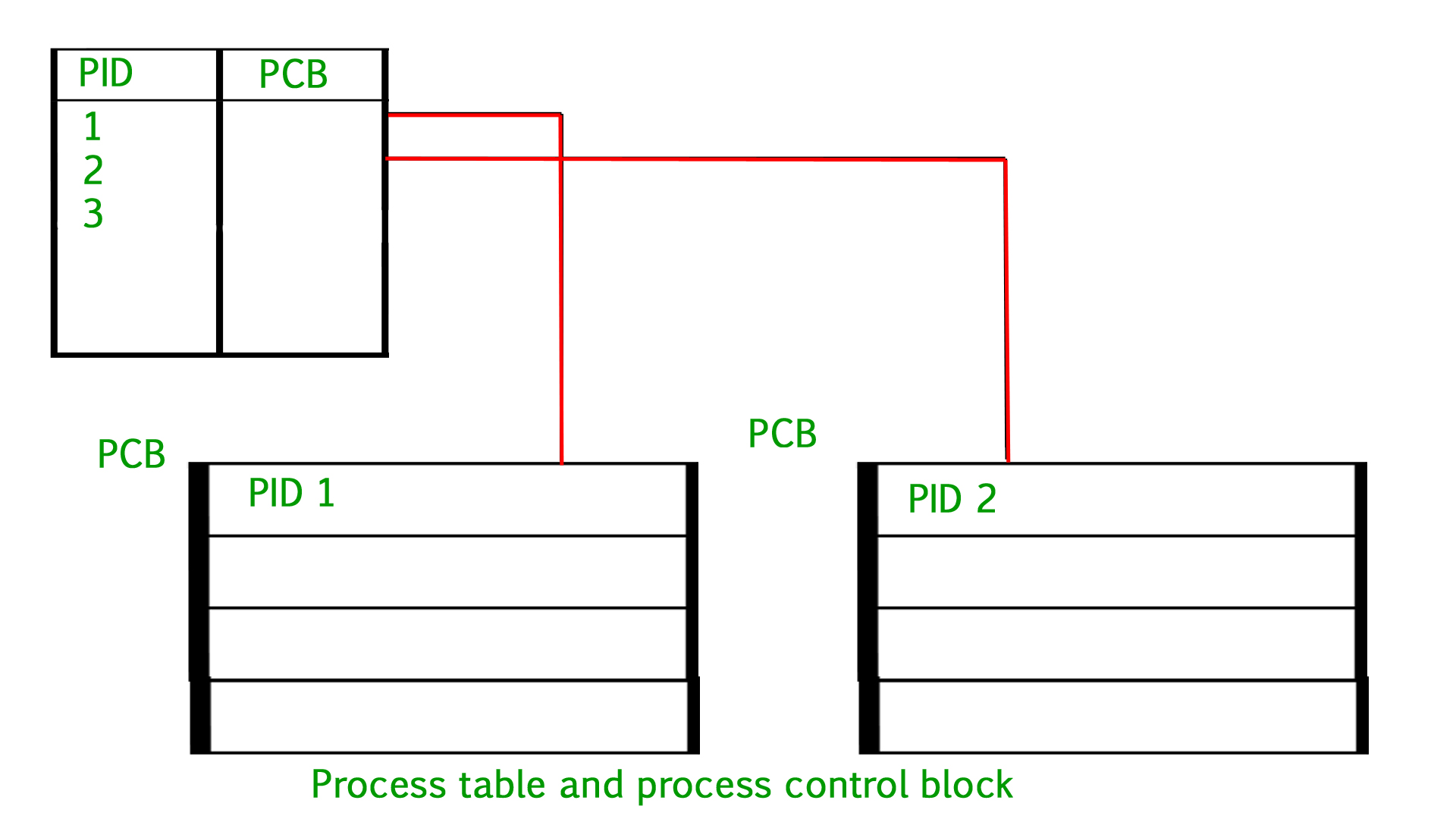
Roles of Process Table & Process Control Block
- Help in Scheduling: Stores process details, and the Process Table organizes them for the scheduler to select the next process.
- Facilitate Context Switching: Keeps CPU registers, stack pointers, and other context data.
- Interrupt Handling: Holds details of interrupts generated by the process and how the OS handled them.
- Enable IPC: Contains flags or pointers for shared memory, pipes, or message queues.
- Support Resource Allocation: Tracks memory, files, and I/O devices assigned to the process.
- Process Synchronization & Deadlock Handling: Maintains lock-related info to detect and manage deadlocks or race conditions.
- Security & Access Control: Stores user ID, group ID, and permissions for enforcing access control.
- Debugging & Monitoring: Provides data used by tools like top or ps for monitoring and debugging.
- Virtual Memory Management: May hold page table details and page-fault handling info.
- Real-Time Systems: Contains deadlines and priority data for time-critical process execution.