

Software testing is performed at different levels to verify the quality, functionality, and reliability of a software application. Each testing level focuses on a specific stage of the software, from individual components to the complete system, helping identify defects before the software is released.
- Detects defects at different stages of software development.
- Ensures individual modules and the complete system work correctly.
- Improves software quality and reduces the cost of fixing defects.
The Levels of software testing are mainly divided into four categories, which are as follows:
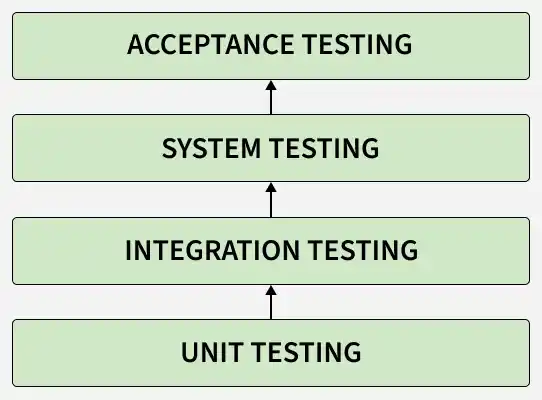
1. Unit Testing
Unit Testing is the first level of software testing in which individual units or components of an application are tested independently. It is usually performed by developers to verify that each unit works correctly before integration.
- Tests individual functions, methods, or classes in isolation.
- Detects defects early, reducing debugging time and development cost.
- Ensures each component behaves as expected.
2. Integration Testing
Integration Testing verifies the interaction and data flow between two or more integrated modules. It ensures that combined components communicate correctly and work together without interface issues.
- Tests communication between integrated modules.
- Identifies interface and data exchange defects.
- Ensures seamless interaction among software components.
3. System Testing
System Testing evaluates the complete and integrated software application to verify that it meets all specified functional and non-functional requirements. It is performed in an environment similar to production.
- Tests the complete application from end to end.
- Verifies functional and non-functional requirements.
- Ensures the software behaves correctly in real-world scenarios.
4. Acceptance Testing
Acceptance Testing is the final level of software testing, where customers or end users verify that the software meets business requirements and is ready for release. Successful completion indicates that the application is acceptable for production.
- Validates software against business and user requirements.
- Confirms the application meets customer expectations.
- Provides final approval before deployment.
Importance of Software Testing Levels
- Helps identify and fix defects at every stage of software development.
- Reduces development cost by detecting issues early.
- Ensures proper interaction between integrated software components.
- Improves software quality, reliability, and performance.
- Verifies that the application meets technical and business requirements.
- Minimizes production risks and deployment failures.
Testing Principles
The following principles should be followed while performing software testing:
- Requirements should be traceable and covered by appropriate test cases.
- Test planning should be completed before test execution begins.
- Apply the Pareto Principle (80/20 Rule), where most defects typically originate from a small portion of the code.
- Begin testing with individual components and gradually move toward testing the complete system.
- Exhaustive testing is impossible because testing every possible input and scenario is impractical.
- Independent testing can provide an unbiased evaluation and improve software quality.
Testing Levels vs Testing Types
| Testing Levels | Testing Types |
|---|---|
| Testing levels define the stages at which software is tested during the Software Development Life Cycle (SDLC). | Testing types define the methods and approaches used to evaluate different aspects of software quality. |
| Focuses on testing software from individual units to the complete application. | Focuses on testing specific functional and non-functional requirements of software. |
| Includes Unit Testing, Integration Testing, System Testing, and Acceptance Testing. | Includes Functional Testing, Performance Testing, Security Testing, Usability Testing, and Regression Testing. |
| Helps identify defects at different stages of software development. | Helps verify software behavior, performance, security, and reliability. |
| Example: Testing a single function (Unit Testing) or the complete application workflow (System Testing). | Example: Checking application speed (Performance Testing) or finding security issues (Security Testing). |