Program to check similarity of given two triangles
Last Updated :
09 Jan, 2023
Given four array of 3 numbers each which represents sides and angles of two triangles. The task is to check if two triangles are similar or not. If it is similar, print the theorem by which it is.
Examples:
Input : side1 = [2, 3, 3] angle1 = [80, 60, 40]
        side2 = [4, 6, 6]  angle2 = [40, 60, 80]
Output: Triangles are similar by SSS AA SAS

Input : side1 = [2, 3, 4] angle1 = [85, 45, 50]
        side2 = [4, 6, 6]  angle2 = [40, 60, 80]
Output: Triangles are not similar
Similar triangles are two or more triangles that have all corresponding angles that are equal and all corresponding sides that are proportionate. It does not matter what direction the triangles are facing. Their size does not matter as long as each side is proportionate. The similarity of triangles can be proved by the following theorems:
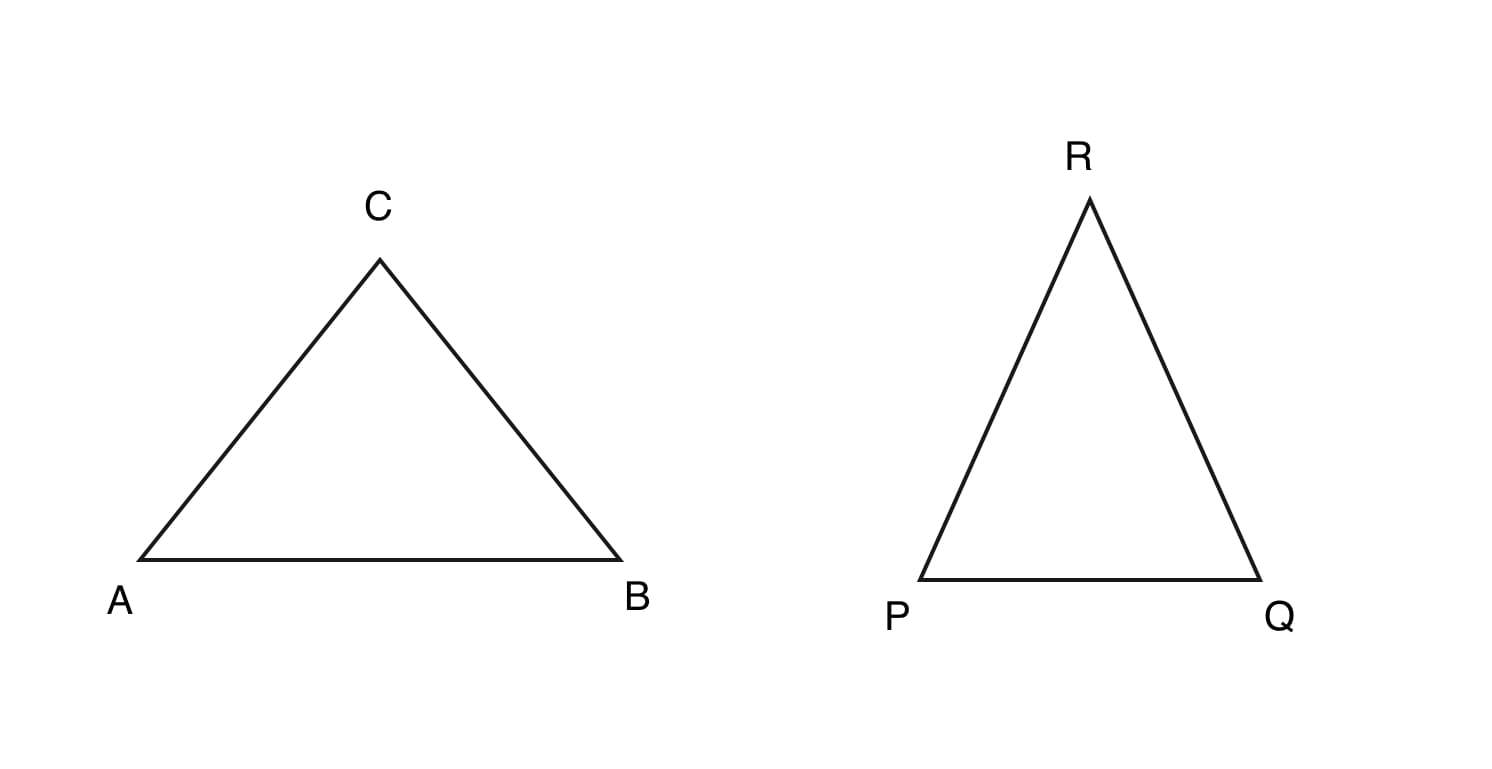
- Side-Side-Side (SSS) similarity criteria :
If all the sides of a triangle are proportional to the corresponding sides of another triangle then the triangles are said to be similar by the property of Side-Side-Side (SSS).
In a triangle ABC and PQR if, AB/PQ = BC/QR = CA/RP triangles are similar.
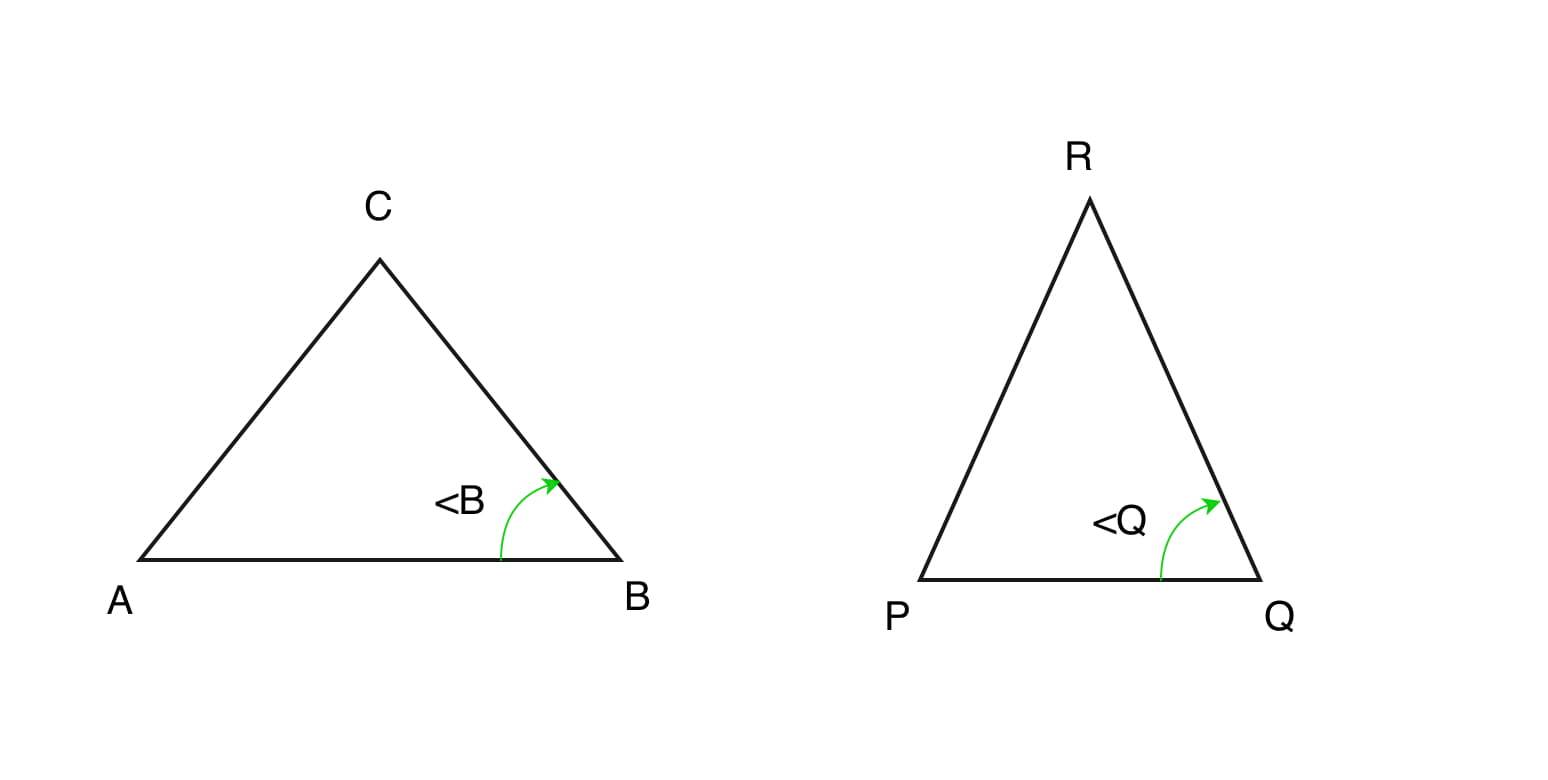
- Side-Angle-Side (SAS) similarity criteria :
If two sides of the two triangles are proportional and the angle between them is same in both triangle then the triangles are said to be similar by the property of Side-Angle-Side (SAS).
In a triangle ABC and PQR if, AB/PQ = BC/QR and \measuredangle ABC = \measuredangle PQR triangles are similar.
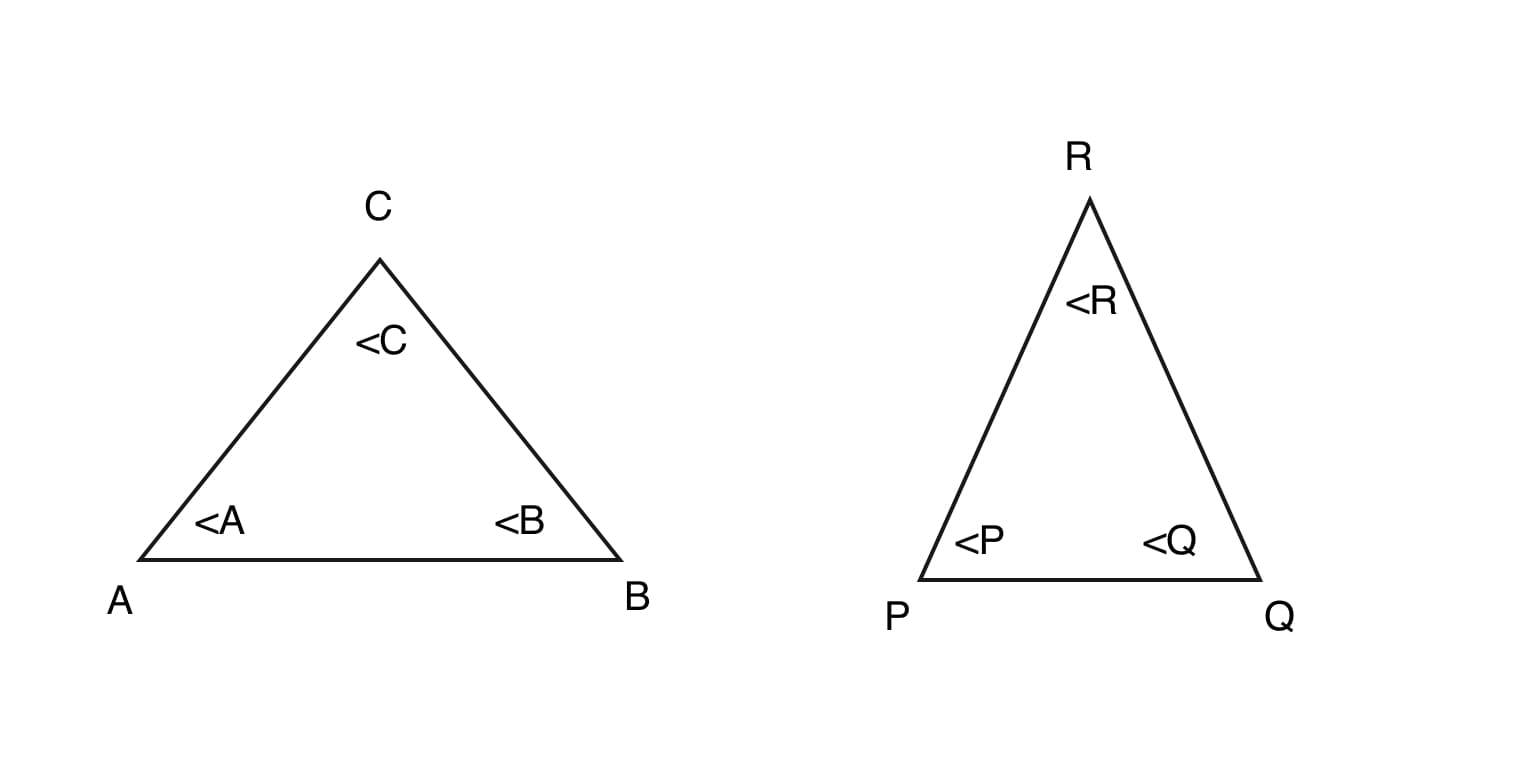
- Angle-Angle (AA) similarity criteria :
If all the angles of a triangle are equal to the corresponding angles of another triangle then the triangles are said to be similar by the property of Angle-Angle (AA).
In a triangle ABC and PQR if \measuredangle ABC = \measuredangle PQR and \measuredangle BCA = \measuredangle QRP or, \measuredangle CAB = \measuredangle RPQ and \measuredangle ABC = \measuredangle PQR or, \measuredangle BCA = \measuredangle QRP and \measuredangle CAB = \measuredangle RPQ then triangles are similar.
Below is the implementation of the above approach:
C++
// C++ program to check similarity between two triangles.

#include <bits/stdc++.h>
using namespace std;

// Function for AA similarity
int simi_aa(float a1[], float a2[])
{
    sort(a1, a1 + 3);
    sort(a2, a2 + 3);

    // Check for AA
    if ((a1[0] == a2[0] && a1[1] == a2[1])
        || (a1[0] == a2[0] && a1[2] == a2[2])
        || (a1[1] == a2[1] && a1[2] == a2[2]))
        return 1;
    else
        return 0;
}

// Function for SAS similarity
int simi_sas(float s1[], float s2[], float a1[], float a2[])
{
    sort(a1, a1 + 3);
    sort(a2, a2 + 3);
    sort(s1, s1 + 3);
    sort(s2, s2 + 3);

    // Check for SAS

    // angle b / w two smallest
    // sides is largest.
    if (s1[0] / s2[0] == s1[1] / s2[1]) {
        // since we take angle
        // b / w the sides.
        if (a1[2] == a2[2])
            return 1;
    }
    if (s1[1] / s2[1] == s1[2] / s2[2]) {
        if (a1[0] == a2[0])
            return 1;
    }
    if (s1[2] / s2[2] == s1[0] / s2[0]) {
        if (a1[1] == a2[1])
            return 1;
    }
    return 0;
}

// Function for SSS similarity
int simi_sss(float s1[], float s2[])
{
    sort(s1, s1 + 3);
    sort(s2, s2 + 3);

    // Check for SSS
    if (s1[0] / s2[0] == s1[1] / s2[1]
        && s1[1] / s2[1] == s1[2] / s2[2]
        && s1[2] / s2[2] == s1[0] / s2[0])
        return 1;

    return 0;
}

// Driver Code
int main()
{
    float s1[] = { 2, 3, 3 };
    float s2[] = { 4, 6, 6 };

    float a1[] = { 80, 60, 40 };
    float a2[] = { 40, 60, 80 };

    // function call for AA similarity
    int aa = simi_aa(a1, a2);

    // function call for SSS similarity
    int sss = simi_sss(s1, s2);

    // function call for SAS similarity
    int sas = simi_sas(s1, s2, a1, a2);

    // Check if triangles are similar or not
    if (aa == 1 || sss == 1 || sas == 1) {
        cout << "Triangles are "
             << "similar by ";
        if (aa == 1)
            cout << "AA ";
        if (sss == 1)
            cout << "SSS ";
        if (sas == 1)
            cout << "SAS ";
    }

    else
        cout << "Triangles are "
             << "not similar";
    return 0;
}

// This code is contributed by Arnab Kundu

// This code is modified by Susobhan Akhuli
// Java program to check
// similarity between
// two triangles.
import java.util.*;
class GFG1 {

    // Function for
    // AA similarity
    static int simi_aa(float a1[], float a2[])
    {
        Arrays.sort(a1);
        Arrays.sort(a2);

        // Check for AA
        if ((a1[0] == a2[0] && a1[1] == a2[1])
            || (a1[0] == a2[0] && a1[2] == a2[2])
            || (a1[1] == a2[1] && a1[2] == a2[2]))
            return 1;
        else
            return 0;
    }

    // Function for
    // SAS similarity
    static int simi_sas(float s1[], float s2[], float a1[],
                        float a2[])
    {
        Arrays.sort(a1);
        Arrays.sort(a2);
        Arrays.sort(s1);
        Arrays.sort(s2);

        // Check for SAS

        // angle b / w two smallest
        // sides is largest.
        if (s1[0] / s2[0] == s1[1] / s2[1]) {
            // since we take angle
            // b / w the sides.
            if (a1[2] == a2[2])
                return 1;
        }
        if (s1[1] / s2[1] == s1[2] / s2[2]) {
            if (a1[0] == a2[0])
                return 1;
        }
        if (s1[2] / s2[2] == s1[0] / s2[0]) {
            if (a1[1] == a2[1])
                return 1;
        }
        return 0;
    }

    // Function for
    // SSS similarity
    static int simi_sss(float s1[], float s2[])
    {
        Arrays.sort(s1);
        Arrays.sort(s2);

        // Check for SSS
        if (s1[0] / s2[0] == s1[1] / s2[1]
            && s1[1] / s2[1] == s1[2] / s2[2]
            && s1[2] / s2[2] == s1[0] / s2[0])
            return 1;

        return 0;
    }

    // Driver Code
    public static void main(String args[])
    {
        float s1[] = { 2, 3, 3 };
        float s2[] = { 4, 6, 6 };

        float a1[] = { 80, 60, 40 };
        float a2[] = { 40, 60, 80 };

        // function call for
        // AA similarity
        int aa = simi_aa(a1, a2);

        // function call for
        // SSS similarity
        int sss = simi_sss(s1, s2);

        // function call for
        // SAS similarity
        int sas = simi_sas(s1, s2, a1, a2);

        // Check if triangles
        // are similar or not
        if (aa == 1 || sss == 1 || sas == 1) {
            System.out.print("Triangles are "
                             + "similar by ");
            if (aa == 1)
                System.out.print("AA ");
            if (sss == 1)
                System.out.print("SSS ");
            if (sas == 1)
                System.out.print("SAS ");
        }
        else
            System.out.println("Triangles are "
                               + "not similar");
    }
}

// This code is contributed by Arnab Kundu

// This code is modified by Susobhan Akhuli
# Python program to check
# similarity between two triangles.

# Function for AA similarity


def simi_aa(a1, a2):
    a1 = [float(i) for i in a1]
    a2 = [float(i) for i in a2]
    a1.sort()
    a2.sort()

    # Check for AA
    if ((a1[0] == a2[0] and a1[1] == a2[1]) or (a1[0] == a2[0] and a1[2] == a2[2]) or (a1[1] == a2[1] and a1[2] == a2[2])):
        return 1
    return 0

# Function for SAS similarity


def simi_sas(s1, s2, a1, a2):

    s1 = [float(i) for i in s1]
    s2 = [float(i) for i in s2]
    a1 = [float(i) for i in a1]
    a2 = [float(i) for i in a2]

    s1.sort()
    s2.sort()
    a1.sort()
    a2.sort()

    # Check for SAS

    # angle b / w two smallest sides is largest.
    if s1[0] / s2[0] == s1[1] / s2[1]:

        # since we take angle b / w the sides.
        if a1[2] == a2[2]:
            return 1

    if s1[1] / s2[1] == s1[2] / s2[2]:
        if a1[0] == a2[0]:
            return 1

    if s1[2] / s2[2] == s1[0] / s2[0]:
        if a1[1] == a2[1]:
            return 1

    return 0

# Function for SSS similarity


def simi_sss(s1, s2):

    s1 = [float(i) for i in s1]
    s2 = [float(i) for i in s2]
    s1.sort()
    s2.sort()

    # Check for SSS
    if(s1[0] / s2[0] == s1[1] / s2[1]
            and s1[1] / s2[1] == s1[2] / s2[2]
            and s1[2] / s2[2] == s1[0] / s2[0]):
        return 1

    return 0


# Driver Code
s1 = [2, 3, 3]
s2 = [4, 6, 6]

a1 = [80, 60, 40]
a2 = [40, 60, 80]

# function call for AA similarity
aa = simi_aa(a1, a2)

# function call for SSS similarity
sss = simi_sss(s1, s2)

# function call for SAS similarity
sas = simi_sas(s1, s2, a1, a2)

# Check if triangles are similar or not
if aa or sss or sas:
    print "Triangles are similar by",
    if aa:
        print "AA",
    if sss:
        print "SSS",
    if sas:
        print "SAS"
else:
    print "Triangles are not similar"

# This code is modified by Susobhan Akhuli
// C# program to check
// similarity between
// two triangles.

using System;

class GFG1 {

    // Function for
    // AA similarity
    static int simi_aa(float[] a1, float[] a2)
    {
        Array.Sort(a1);
        Array.Sort(a2);

        // Check for AA
        if ((a1[0] == a2[0] && a1[1] == a2[1])
            || (a1[0] == a2[0] && a1[2] == a2[2])
            || (a1[1] == a2[1] && a1[2] == a2[2]))
            return 1;
        else
            return 0;
    }

    // Function for
    // SAS similarity
    static int simi_sas(float[] s1, float[] s2, float[] a1,
                        float[] a2)
    {
        Array.Sort(a1);
        Array.Sort(a2);
        Array.Sort(s1);
        Array.Sort(s2);

        // Check for SAS

        // angle b / w two smallest
        // sides is largest.
        if (s1[0] / s2[0] == s1[1] / s2[1]) {
            // since we take angle
            // b / w the sides.
            if (a1[2] == a2[2])
                return 1;
        }
        if (s1[1] / s2[1] == s1[2] / s2[2]) {
            if (a1[0] == a2[0])
                return 1;
        }
        if (s1[2] / s2[2] == s1[0] / s2[0]) {
            if (a1[1] == a2[1])
                return 1;
        }
        return 0;
    }

    // Function for
    // SSS similarity
    static int simi_sss(float[] s1, float[] s2)
    {
        Array.Sort(s1);
        Array.Sort(s2);

        // Check for SSS
        if (s1[0] / s2[0] == s1[1] / s2[1]
            && s1[1] / s2[1] == s1[2] / s2[2]
            && s1[2] / s2[2] == s1[0] / s2[0])
            return 1;

        return 0;
    }

    // Driver Code
    public static void Main()
    {
        float[] s1 = { 2, 3, 3 };
        float[] s2 = { 4, 6, 6 };

        float[] a1 = { 80, 60, 40 };
        float[] a2 = { 40, 60, 80 };

        // function call for
        // AA similarity
        int aa = simi_aa(a1, a2);

        // function call for
        // SSS similarity
        int sss = simi_sss(s1, s2);

        // function call for
        // SAS similarity
        int sas = simi_sas(s1, s2, a1, a2);

        // Check if triangles
        // are similar or not
        if (aa == 1 || sss == 1 || sas == 1) {
            Console.Write("Triangles are "
                          + "similar by ");
            if (aa == 1)
                Console.Write("AA ");
            if (sss == 1)
                Console.Write("SSS ");
            if (sas == 1)
                Console.Write("SAS ");
        }
        else
            Console.WriteLine("Triangles are "
                              + "not similar");
    }
}

// This code is contributed by Ryuga

// This code is modified by Susobhan Akhuli
<?php
// PHP program to check similarity between
// two triangles.

// Function for AA similarity
function simi_aa($a1, $a2)
{
    sort($a1);
    sort($a2);

    // Check for AA
    if (($a1[0] == $a2[0] && $a1[1] == $a2[1])
         || ($a1[0] == $a2[0] && $a1[2] == $a2[2])
         || ($a1[1] == $a2[1] && $a1[2] == $a2[2]))
        return 1;
    else
        return 0;

}

// Function for SAS similarity
function simi_sas($s1, $s2, $a1, $a2)
{
    sort($a1);
    sort($a2);
    sort($s1);
    sort($s2);

    // Check for SAS

    // angle b / w two smallest
    // sides is largest.
    if( $s1[0] / $s2[0] == $s1[1] / $s2[1])
    {
        // since we take angle b / w the sides.
        if ($a1[2] == $a2[2])
            return 1;
    }
    if ($s1[1] / $s2[1] == $s1[2] / $s2[2])
    {
        if ($a1[0] == $a2[0])
            return 1;
    }
    if ($s1[2] / $s2[2] == $s1[0] / $s2[0])
    {
        if($a1[1] == $a2[1])
            return 1;
    }
    return 0;
}

// Function for SSS similarity
function simi_sss($s1, $s2)
{
    sort($s1);
    sort($s2);

    // Check for SSS
    if($s1[0] / $s2[0] == $s1[1] / $s2[1] &&
       $s1[1] / $s2[1] == $s1[2] / $s2[2] &&
       $s1[2] / $s2[2] == $s1[0] / $s2[0])
        return 1;

    return 0;
}

// Driver Code
$s1 = array(2, 3, 3);
$s2 = array(4, 6, 6);

$a1 = array(80, 60, 40);
$a2 = array(40, 60, 80);

// function call for
// AA similarity
$aa = simi_aa($a1, $a2);

// function call for
// SSS similarity
$sss = simi_sss($s1, $s2) ;

// function call for
// SAS similarity
$sas = simi_sas($s1, $s2,
                $a1, $a2) ;

// Check if triangles
// are similar or not
if($aa == 1 || $sss == 1 || $sas == 1)
{
    echo "Triangles are similar by ";
    if($aa == 1) echo "AA ";
    if($sss == 1) echo "SSS ";
    if($sas == 1) echo "SAS ";
}

else
    echo "Triangles are not similar";

// This code is contributed by ajit.
// This code is modified by Susobhan Akhuli
?>
<script>
    // Javascript program to check
    // similarity between
    // two triangles.

    // Function for
    // AA similarity
    function simi_aa(a1, a2)
    {
        a1.sort(function(a, b){return a - b});
        a2.sort(function(a, b){return a - b});

        // Check for AA
        if ((a1[0] == a2[0] && a1[1] == a2[1])
         || (a1[0] == a2[0] && a1[2] == a2[2])
         || (a1[1] == a2[1] && a1[2] == a2[2]))
            return 1;
        else
            return 0;

    }

    // Function for
    // SAS similarity
    function simi_sas(s1, s2, a1, a2)
    {
        a1.sort(function(a, b){return a - b});
        a2.sort(function(a, b){return a - b});
        s1.sort(function(a, b){return a - b});
        s2.sort(function(a, b){return a - b});

        // Check for SAS

        // angle b / w two smallest
        // sides is largest.
        if(s1[0] / s2[0] == s1[1] / s2[1])
        {
            // since we take angle
            // b / w the sides.
            if (a1[2] == a2[2])
                return 1;
        }
        if (s1[1] / s2[1] == s1[2] / s2[2])
        {
            if (a1[0] == a2[0])
                return 1;
        }
        if (s1[2] / s2[2] == s1[0] / s2[0])
        {
            if(a1[1] == a2[1])
                return 1;
        }
        return 0;
    }

    // Function for
    // SSS similarity
    function simi_sss(s1, s2)
    {
        s1.sort(function(a, b){return a - b});
        s2.sort(function(a, b){return a - b});

        // Check for SSS
        if(s1[0] / s2[0] == s1[1] / s2[1] &&
        s1[1] / s2[1] == s1[2] / s2[2] &&
        s1[2] / s2[2] == s1[0] / s2[0])
            return 1;

        return 0;
    }

    let s1 = [2, 3, 3];
    let s2 = [4, 6, 6];

    let a1 = [80, 60, 40];
    let a2 = [40, 60, 80];

    // function call for
    // AA similarity
    let aa = simi_aa(a1, a2);

    // function call for
    // SSS similarity
    let sss = simi_sss(s1, s2) ;

    // function call for
    // SAS similarity
    let sas = simi_sas(s1, s2, a1, a2) ;

    // Check if triangles
    // are similar or not
    if(aa == 1 || sss == 1 || sas == 1)
    {
        document.write("Triangles are " + "similar by ");
        if(aa == 1) document.write("AA ");
        if(sss == 1) document.write("SSS ");
        if(sas == 1) document.write("SAS ");
    }
    else
        document.write("Triangles are not similar");

// This code is contributed by rameshtravel07.

// This code is modified by Susobhan Akhuli
</script>
OutputTriangles are similar by AA SSS SAS
Time Complexity: O(1) As the arrays have only 3 elements, so the total time taken can be treated as constant.
Auxiliary Space: O(1)
Explore
DSA Fundamentals
Data Structures
Algorithms
Advanced
Interview Preparation
Practice Problem