Seals of Harappan Civilization
Last Updated :
26 Mar, 2024
Seals of Harappan Civilization: The Indus Valley Civilization, known for its enigmatic seals and script, reflects early advancements in art and writing. These artifacts suggest the existence of a unique language system among the Harappans, akin to scripts found in Egypt and Mesopotamia.
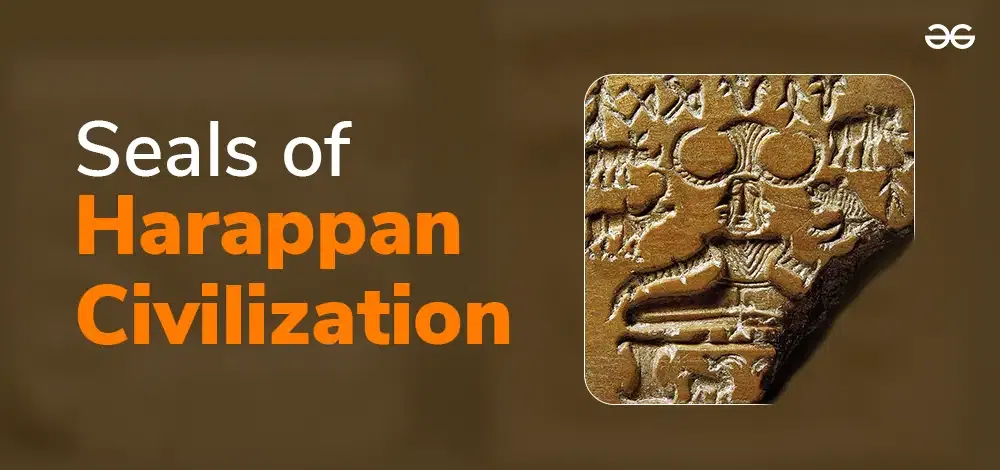
The seals are a glimpse into the Harappan trade, religion, and beliefs, showcasing a pictographic script, including depictions of one-horned bulls, tigers, elephants, and more. Some scholars propose connections to Lord Shiva through seals like Pashupati, revealing religious inclinations.
Let us learn more!
 Seals of Harappan Civilization
History of Seals in Harappan Civilization
The Harappan civilization, also known as the Indus Valley Civilization, used seals extensively for administrative and commercial purposes, as well as for religious or ceremonial rituals. These seals, made primarily from steatite, featured various motifs, including animals, mythical figures, and scripts that remain undeciphered. They are believed to have been used to mark goods, sign documents, or as amulets. The discovery of these seals has provided significant insights into the trade, economy, and social structure of the Harappan society.
Characteristics of Harappan Seals
1. Materials and Shapes: Seals are primarily crafted from steatite, occasionally from terracotta, gold, and other materials. Square or rectangular shapes were common, although circular seals were also found. Seals were predominantly made from steatite, known for its softness, while others were crafted from diverse materials like terracotta, gold, agate, chert, ivory, and faience.
2. Symbolism and Writing: The seals feature animals like tigers, bulls, elephants, and more, alongside inscriptions in an undeciphered pictographic script. Most seals showcased animals and had inscriptions in a script that remains undeciphered, highlighting various creatures and possibly holding symbolic or commercial significance.
3. Usage and Significance: Seals were likely utilized for commercial transactions and possibly as amulets or identification markers. Seals were potentially employed by traders to mark goods and might have served as identification or amulets due to their unique inscriptions and symbols. Despite numerous discoveries, the Harappan script, comprising nearly 400 signs, remains undeciphered.
Scholars speculate its evolution from a pictographic to a potentially phonetic or alphabetic form. While attempts have been made, the script's complexity, with various signs and changing directions of writing, poses a significant challenge. Scholars continue efforts to decode its linguistic and cultural significance.
Pashupati Seals of Harappan Civilization
The Pashupati Seal from the Harappan Civilization is a notable archaeological find, depicting a figure often identified as an early representation of the Hindu god Shiva (Pashupati). This figure is seated in a yogic position and surrounded by animals, suggesting a deity of nature or lord of animals motif. The seal is a key piece of evidence for understanding the religious beliefs and practices of the Harappan people, indicating a sophisticated spiritual and cultural life.
Harappan Seals are Made of?
Harappan seals were primarily made of steatite, a soft, white stone that hardens upon firing. They often featured beautifully carved animal and human figures, along with inscriptions in the still undeciphered Harappan script. These seals served various purposes, including trade, administration, and possibly religious or ceremonial functions.
Two Important Seals of Harappan Civilization
Two significant seals from the Harappan Civilization include the Pashupati Seal, depicting a figure seated in a yogic position and surrounded by animals, believed to represent an early form of the Hindu deity Shiva. Another important seal features a unicorn, suggesting the civilization's richness in symbolic and possibly totemic animal representation. These seals reflect the advanced culture, religious practices, and trade mechanisms of the Harappan people.