Buy New
-
To see product details, add this item to your cart.
Ships from: Amazon.com Sold by: Amazon.com
Used - Very Good
-
To see product details, add this item to your cart.
Ships from: Bahamut Media Sold by: Bahamut Media
Download the free Kindle app and start reading Kindle books instantly on your smartphone, tablet, or computer - no Kindle device required.
Read instantly on your browser with Kindle for Web.
Using your mobile phone camera - scan the code below and download the Kindle app.
Follow the author
OK
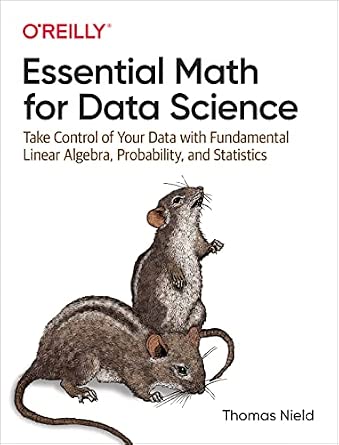
Essential Math for Data Science: Take Control of Your Data with Fundamental Linear Algebra, Probability, and Statistics
Purchase options and add-ons
Master the math needed to excel in data science, machine learning, and statistics. In this book author Thomas Nield guides you through areas like calculus, probability, linear algebra, and statistics and how they apply to techniques like linear regression, logistic regression, and neural networks. Along the way you'll also gain practical insights into the state of data science and how to use those insights to maximize your career.
Learn how to:
- Use Python code and libraries like SymPy, NumPy, and scikit-learn to explore essential mathematical concepts like calculus, linear algebra, statistics, and machine learning
- Understand techniques like linear regression, logistic regression, and neural networks in plain English, with minimal mathematical notation and jargon
- Perform descriptive statistics and hypothesis testing on a dataset to interpret p-values and statistical significance
- Manipulate vectors and matrices and perform matrix decomposition
- Integrate and build upon incremental knowledge of calculus, probability, statistics, and linear algebra, and apply it to regression models including neural networks
- Navigate practically through a data science career and avoid common pitfalls, assumptions, and biases while tuning your skill set to stand out in the job market
- ISBN-101098102932
- ISBN-13978-1098102937
- Edition1st
- PublisherO'Reilly Media
- Publication dateJuly 5, 2022
- LanguageEnglish
- Dimensions7 x 0.75 x 9 inches
- Print length349 pages
Frequently bought together

Customers who viewed this item also viewed
- Data Science from Scratch: First Principles with PythonPaperbackFREE Shipping by AmazonGet it as soon as Saturday, Sep 19
- Practical Statistics for Data Scientists: 50+ Essential Concepts Using R and PythonPaperbackFREE Shipping by AmazonGet it as soon as Saturday, Sep 19
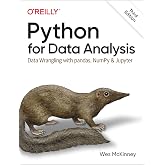
- Python for Data Analysis: Data Wrangling with pandas, NumPy, and JupyterPaperbackGet it as soon as Wednesday, Sep 30
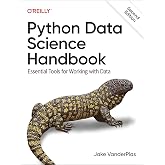
- Python Data Science Handbook: Essential Tools for Working with DataPaperbackFREE Shipping by AmazonGet it as soon as Saturday, Sep 19Only 3 left in stock (more on the way).
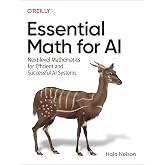
- Essential Math for AI: Next-Level Mathematics for Efficient and Successful AI SystemsPaperbackFREE Shipping by AmazonGet it as soon as Saturday, Sep 19Only 6 left in stock (more on the way).
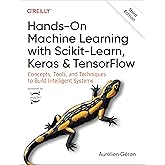
- Hands-On Machine Learning with Scikit-Learn, Keras, and TensorFlow: Concepts, Tools, and Techniques to Build Intelligent SystemsPaperbackFREE Shipping by AmazonGet it as soon as Monday, Sep 21
Customers also bought or read
- Data Science from Scratch: First Principles with Python
Paperback$35.54$35.54FREE delivery Sat, Sep 19 - Practical Statistics for Data Scientists: 50+ Essential Concepts Using R and Python
Paperback$69.09$69.09FREE delivery Sat, Sep 19 - Practical Linear Algebra for Data Science: From Core Concepts to Applications Using Python
Paperback$45.89$45.89FREE delivery Sat, Sep 19 - Python for Data Analysis: Data Wrangling with pandas, NumPy, and Jupyter
Paperback$43.99$43.99FREE delivery Sep 30 - Oct 16 - Python Data Science Handbook: Essential Tools for Working with Data
Paperback$44.18$44.18FREE delivery Sat, Sep 19 - SQL for Data Analysis: Advanced Techniques for Transforming Data into Insights
Paperback$36.49$36.49FREE delivery Sat, Sep 19 - Hands-On Machine Learning with Scikit-Learn, Keras, and TensorFlow: Concepts, Tools, and Techniques to Build Intelligent Systems
Paperback$49.50$49.50FREE delivery Mon, Sep 21 - R for Data Science: Import, Tidy, Transform, Visualize, and Model Data
Paperback$43.99$43.99FREE delivery Sat, Sep 19 - Mathematics of Machine Learning: Master linear algebra, calculus, and probability for machine learning
Paperback$44.30$44.30FREE delivery Mon, Sep 21 - Fundamentals of Data Engineering: Plan and Build Robust Data Systems
Paperback$40.00$40.00FREE delivery Sep 27 - Oct 14 - Math for Deep Learning: What You Need to Know to Understand Neural Networks
Paperback$35.48$35.48FREE delivery Sat, Sep 19 - Hands-On Machine Learning with Scikit-Learn and PyTorch: Concepts, Tools, and Techniques to Build Intelligent Systems
Paperback$77.72$77.72FREE delivery Sat, Sep 19 - An Introduction to Statistical Learning: with Applications in Python (Springer Texts in Statistics)
Hardcover$56.21$56.21FREE delivery Sep 30 - Oct 2 - Machine Learning Design Patterns: Solutions to Common Challenges in Data Preparation, Model Building, and MLOps
Paperback$36.99$36.99FREE delivery Sat, Sep 19 - AI-Assisted Statistics for Data Scientists: 50+ Essential Concepts Using R and Python#1 New ReleaseMathematical & Statistical Software
Paperback$59.99$59.99FREE delivery Sat, Sep 19 - Machine Learning with PyTorch and Scikit-Learn: Develop machine learning and deep learning models with Python#1 Best SellerSpeech & Audio Processing
Paperback$36.05$36.05FREE delivery Sat, Sep 19 - Designing Machine Learning Systems: An Iterative Process for Production-Ready Applications
Paperback$40.00$40.00FREE delivery Sat, Sep 19 - Fundamentals of Data Visualization: A Primer on Making Informative and Compelling Figures
Paperback$47.00$47.00FREE delivery Mon, Sep 21 - Ace the Data Science Interview: 201 Real Interview Questions Asked By FAANG, Tech Startups, & Wall Street
Paperback$45.00$45.00FREE delivery Mon, Sep 21 - Becoming a Data Head: How to Think, Speak, and Understand Data Science, Statistics, and Machine Learning
Paperback$21.69$21.69Delivery Sat, Sep 19 - The Hundred-Page Machine Learning Book (The Hundred-Page Books)
Paperback$26.23$26.23Delivery Mon, Sep 21 - Fluent Python: Clear, Concise, and Effective Programming
Paperback$43.99$43.99FREE delivery Sat, Sep 19
From the brand
-
Explore more Data Science
-
Start learning with O'Reilly
-
More From O'Reilly
-
Sharing the knowledge of experts
O'Reilly's mission is to change the world by sharing the knowledge of innovators. For over 40 years, we've inspired companies and individuals to do new things (and do them better) by providing the skills and understanding that are necessary for success.
Our customers are hungry to build the innovations that propel the world forward. And we help them do just that.
From the Publisher
From the Preface
In the past 10 years or so, there has been a growing interest in applying math and statistics to our everyday work and lives. Why is that? Does it have to do with the accelerated interest in “data science,” which Harvard Business Review called “the Sexiest Job of the 21st Century”? Or is it the promise of machine learning and “artificial intelligence” changing our lives? Is it because news headlines are inundated with studies, polls, and research findings but unsure how to scrutinize such claims? Or is it the promise of “self-driving” cars and robots automating jobs in the near future?
I will make the argument that the disciplines of math and statistics have captured mainstream interest because of the growing availability of data, and we need math, statistics, and machine learning to make sense of it. Yes, we do have scientific tools, machine learning, and other automations that call to us like sirens. We blindly trust these “black boxes,” devices, and softwares; we do not understand them but we use them anyway.
While it is easy to believe computers are smarter than we are (and this idea is frequently marketed), the reality cannot be more the opposite. This disconnect can be precarious on so many levels. Do you really want an algorithm or AI performing criminal sentencing or driving a vehicle, but nobody including the developer can explain why it came to a specific decision? Explainability is the next frontier of statistical computing and AI. This can begin only when we open up the black box and uncover the math.
You may also ask how can a developer not know how their own algorithm works? We will talk about that in the second half of the book when we discuss machine learning techniques and emphasize why we need to understand the math behind the black boxes we build.
To another point, the reason data is being collected on a massive scale is largely due to connected devices and their presence in our everyday lives. We no longer solely use the internet on a desktop or laptop computer. We now take it with us in our smartphones, cars, and household devices. This has subtly enabled a transition over the past two decades. Data has now evolved from an operational tool to something that is collected and analyzed for less-defined objectives. A smartwatch is constantly collecting data on our heart rate, breathing, walking distance, and other markers. Then it uploads that data to a cloud to be analyzed alongside other users. Our driving habits are being collected by computerized cars and being used by manufacturers to collect data and enable self-driving vehicles. Even “smart toothbrushes” are finding their way into drugstores, which track brushing habits and store that data in a cloud. Whether smart toothbrush data is useful and essential is another discussion!
All of this data collection is permeating every corner of our lives. It can be overwhelming, and a whole book can be written on privacy concerns and ethics. But this availability of data also creates opportunities to leverage math and statistics in new ways and create more exposure outside academic environments. We can learn more about the human experience, improve product design and application, and optimize commercial strategies. If you understand the ideas presented in this book, you will be able to unlock the value held in our data-hoarding infrastructure. This does not imply that data and statistical tools are a silver bullet to solve all the world’s problems, but they have given us new tools that we can use. Sometimes it is just as valuable to recognize certain data projects as rabbit holes and realize efforts are better spent elsewhere.
This growing availability of data has made way for data science and machine learning to become in-demand professions. We define essential math as an exposure to probability, linear algebra, statistics, and machine learning. If you are seeking a career in data science, machine learning, or engineering, these topics are necessary. I will throw in just enough college math, calculus, and statistics necessary to better understand what goes in the black box libraries you will encounter.
With this book, I aim to expose readers to different mathematical, statistical, and machine learning areas that will be applicable to real-world problems. The first four chapters cover foundational math concepts including practical calculus, probability, linear algebra, and statistics. The last three chapters will segue into machine learning. The ultimate purpose of teaching machine learning is to integrate everything we learn and demonstrate practical insights in using machine learning and statistical libraries beyond a black box understanding.
The only tool needed to follow examples is a Windows/Mac/Linux computer and a Python 3 environment of your choice. The primary Python libraries we will need are numpy, scipy, sympy, and sklearn. This book will not make you an expert or give you PhD knowledge. I do my best to avoid mathematical expressions full of Greek symbols and instead strive to use plain English in its place. But what this book will do is make you more comfortable talking about math and statistics, giving you essential knowledge to navigate these areas successfully. I believe the widest path to success is not having deep, specialized knowledge in one topic, but instead having exposure and practical knowledge across several topics. That is the goal of this book, and you will learn just enough to be dangerous and ask those once-elusive critical questions.
Editorial Reviews
About the Author
He is also the founder and inventor of Yawman Flight, a company developing universal handheld flight controls for flight simulation and unmanned aerial vehicles.
Product details
- Publisher : O'Reilly Media
- Publication date : July 5, 2022
- Edition : 1st
- Language : English
- Print length : 349 pages
- ISBN-10 : 1098102932
- ISBN-13 : 978-1098102937
- Item Weight : 1.28 pounds
- Dimensions : 7 x 0.75 x 9 inches
- Best Sellers Rank: #120,614 in Books (See Top 100 in Books)
- #10 in Linear Algebra (Books)
- #47 in Calculus (Books)
- Customer Reviews:
About the author

Discover more of the author’s books, see similar authors, read book recommendations and more.