Shop Boppo
To see product details, add this item to your cart. You can always remove it later.
Shipper / Seller
Amazon.com
Amazon.com
Shipper / Seller
Amazon.com
Returns
30-day refund / replacement
This item can be returned in its original condition for a full refund or replacement within 30 days of receipt.
Read full return policy
Gift options
Available at checkout
Available at checkout This item is a gift. Change
At checkout, you can add a custom message, a gift receipt for easy returns and have the item gift-wrapped
Payment
Secure transaction
Your transaction is secure
We work hard to protect your security and privacy. Our payment security system encrypts your information during transmission. We don’t share your credit card details with third-party sellers, and we don’t sell your information to others. Learn more
Added to

Sorry, there was a problem.

There was an error retrieving your Wish Lists. Please try again.

Sorry, there was a problem.

List unavailable.
Kindle app logo image

Download the free Kindle app and start reading Kindle books instantly on your smartphone, tablet, or computer - no Kindle device required.

Read instantly on your browser with Kindle for Web.

Using your mobile phone camera - scan the code below and download the Kindle app.

QR code to download the Kindle App

  • Fundamentals of Data Engineering: Plan and Build Robust Data Systems

Follow the authors

Get new release updates & improved recommendations
Something went wrong. Please try your request again later.

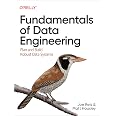
Fundamentals of Data Engineering: Plan and Build Robust Data Systems

4.7 out of 5 stars (913)

Purchase options and add-ons

Data engineering has grown rapidly in the past decade, leaving many software engineers, data scientists, and analysts looking for a comprehensive view of this practice. With this practical book, you'll learn how to plan and build systems to serve the needs of your organization and customers by evaluating the best technologies available through the framework of the data engineering lifecycle.

Authors Joe Reis and Matt Housley walk you through the data engineering lifecycle and show you how to stitch together a variety of cloud technologies to serve the needs of downstream data consumers. You'll understand how to apply the concepts of data generation, ingestion, orchestration, transformation, storage, and governance that are critical in any data environment regardless of the underlying technology.

This book will help you:

  • Get a concise overview of the entire data engineering landscape
  • Assess data engineering problems using an end-to-end framework of best practices
  • Cut through marketing hype when choosing data technologies, architecture, and processes
  • Use the data engineering lifecycle to design and build a robust architecture
  • Incorporate data governance and security across the data engineering lifecycle

Frequently bought together

This item: Fundamentals of Data Engineering: Plan and Build Robust Data Systems
$40.00
Get it as soon as Tuesday, Sep 29
Ships from and sold by Amazon.com.
+
$56.86
Get it as soon as Saturday, Sep 19
In Stock
Ships from and sold by Amazon.com.
+
$38.44
Get it as soon as Saturday, Sep 19
In Stock
Sold by ayvax and ships from Amazon Fulfillment.
Total price: $00
To see our price, add these items to your cart.
Details
Added to Cart
Some of these items ship sooner than the others.
Choose items to buy together.

Customers also bought or read

Loading...

From the brand


From the Publisher

Fundamentals of Data Engineering

From the Preface

How did this book come about? The origin is deeply rooted in our journey from data science into data engineering. We often jokingly refer to ourselves as recovering data scientists. We both had the experience of being assigned to data science projects, then struggling to execute these projects due to a lack of proper foundations. Our journey into data engineering began when we undertook data engineering tasks to build foundations and infrastructure.

With the rise of data science, companies splashed out lavishly on data science talent, hoping to reap rich rewards. Very often, data scientists struggled with basic problems that their background and training did not address—data collection, data cleansing, data access, data transformation, and data infrastructure. These are problems that data engineering aims to solve.

What This Book Isn’t

Before we cover what this book is about and what you’ll get out of it, let’s quickly cover what this book isn’t. This book isn’t about data engineering using a particular tool, technology, or platform. While many excellent books approach data engineering technologies from this perspective, these books have a short shelf life. Instead, we focus on the fundamental concepts behind data engineering.

By the end of this book you will understand:

  • How data engineering impacts your current role (data scientist, software engineer, or data team)
  • How to cut through the marketing hype and choose the right technologies, data arch. & processes
  • How to use the data engineering lifecycle to design and build a robust architecture
  • Best practices for each stage of the data lifecycle

What This Book Is About

This book aims to fill a gap in current data engineering content and materials. While there’s no shortage of technical resources that address specific data engineering tools and technologies, people struggle to understand how to assemble these components into a coherent whole that applies in the real world. This book connects the dots of the end-to-end data lifecycle. It shows you how to stitch together various technologies to serve the needs of downstream data consumers such as analysts, data scientists, and machine learning engineers. This book works as a complement to O’Reilly books that cover the details of particular technologies, platforms, and programming languages.

The big idea of this book is the data engineering lifecycle: data generation, storage, ingestion, transformation, and serving. Since the dawn of data, we’ve seen the rise and fall of innumerable specific technologies and vendor products, but the data engineering lifecycle stages have remained essentially unchanged. With this framework, the reader will come away with a sound understanding for applying technologies to real-world business problems.

Our goal here is to map out principles that reach across two axes. First, we wish to distill data engineering into principles that can encompass any relevant technology. Second, we wish to present principles that will stand the test of time. We hope that these ideas reflect lessons learned across the data technology upheaval of the last twenty years and that our mental framework will remain useful for a decade or more into the future.

One thing to note: we unapologetically take a cloud-first approach. We view the cloud as a fundamentally transformative development that will endure for decades; most on-premises data systems and workloads will eventually move to cloud hosting. We assume that infrastructure and systems are ephemeral and scalable, and that data engineers will lean toward deploying managed services in the cloud. That said, most concepts in this book will translate to non-cloud environments.

Who Should Read This Book

Our primary intended audience for this book consists of technical practitioners, mid- to senior-level software engineers, data scientists, or analysts interested in moving into data engineering; or data engineers working in the guts of specific technologies, but wanting to develop a more comprehensive perspective. Our secondary target audience consists of data stakeholders who work adjacent to technical practitioners—e.g., a data team lead with a technical background overseeing a team of data engineers, or a director of data warehousing wanting to migrate from on-premises technology to a cloud-based solution.

Ideally, you’re curious and want to learn—why else would you be reading this book? You stay current with data technologies and trends by reading books and articles on data warehousing/data lakes, batch and streaming systems, orchestration, modeling, management, analysis, developments in cloud technologies, etc. This book will help you weave what you’ve read into a complete picture of data engineering across technologies and paradigms.

Editorial Reviews

About the Author

Joe Reis is a business-minded data nerd who's worked in the data industry for 20 years, with responsibilities ranging from statistical modeling, forecasting, machine learning, data engineering, data architecture, and almost everything else in between. Joe is the CEO and cofounder of Ternary Data, a data engineering and architecture consulting firm based in Salt Lake City, Utah. In addition, he volunteers with several technology groups and teaches at the University of Utah. In his spare time, Joe likes to rock climb, produce electronic music, and take his kids on crazy adventures.

Matt Housley is a data engineering consultant and cloud specialist. After some early programming experience with Logo, Basic, and 6502 assembly, he completed a PhD in mathematics at the University of Utah. Matt then began working in data science, eventually specializing in cloud-based data engineering. He cofounded Ternary Data with Joe Reis, where he leverages his teaching experience to train future data engineers and advise teams on robust data architecture. Matt and Joe also pontificate on all things data on The Monday Morning Data Chat.

Product details

  • Publisher ‏ : ‎ O'Reilly Media
  • Publication date ‏ : ‎ July 26, 2022
  • Edition ‏ : ‎ 1st
  • Language ‏ : ‎ English
  • Print length ‏ : ‎ 447 pages
  • ISBN-10 ‏ : ‎ 1098108302
  • ISBN-13 ‏ : ‎ 978-1098108304
  • Item Weight ‏ : ‎ 2.31 pounds
  • Dimensions ‏ : ‎ 7 x 1 x 9.25 inches
  • Best Sellers Rank: #48,614 in Books (See Top 100 in Books)
  • Customer Reviews:
    4.7 out of 5 stars (913)

About the authors

Follow authors to get new release updates, plus improved recommendations.