


 9 min
Embedded Wallets for Payment Platforms: How They Work
The seed phrase disappears, but the questions behind it stay. Who signs a transfer and who restores access after a lost phone become architecture decisions with legal weight, and below we look at custody, payment flows, and provider selection.
What Is an Embedded Wallet?
An embedded wallet is a crypto wallet built into an application's own interface. Vendor documentation mixes it with two neighboring layers, so the answer to what is an embedded wallet needs a finer split:
- Embedded wallet. Created and used inside the platform's interface. Onboarding reuses the platform login, so the user signs a transfer without switching apps.
- External wallet. A standalone mobile or hardware wallet connected through WalletConnect or a browser extension. Keys never touch the platform's servers. Gas comes from the user's own balance.
- Wallet-as-a-service. Rented infrastructure for key management, signing, and recovery, called through an SDK instead of custody built in-house.
Crypto wallet as a service is the supply side, and the embedded wallet is the part the user sees. We recommend supporting external wallets too. A user who keeps USDT on an exchange will then send crypto from another wallet instead of opening a new account.
How Embedded Crypto Wallets Work
Every embedded wallet runs one sequence: user identity — wallet — authorization — execution.
Authentication comes first. The user enters a one-time email code or confirms a passkey, and the identity layer belongs either to the platform or to the wallet vendor. A vendor-owned layer ties accounts to that vendor, and a later migration means re-onboarding every user.
Keys are generated at sign-up inside a trusted execution environment or split into MPC shares. The split decides whether any party besides the user is able to sign.
Execution follows a fixed order of policy check → signature → broadcast. A smart account under ERC-4337 bundles an approval with a transfer and lets a paymaster pay the gas.
Authorization is the step where platforms save effort most. A session token stolen through a fake login page must not be enough to move funds, so we recommend a separate passkey confirmation for withdrawals above a set threshold, for example $300.
Custodial and Non-Custodial Embedded Wallets
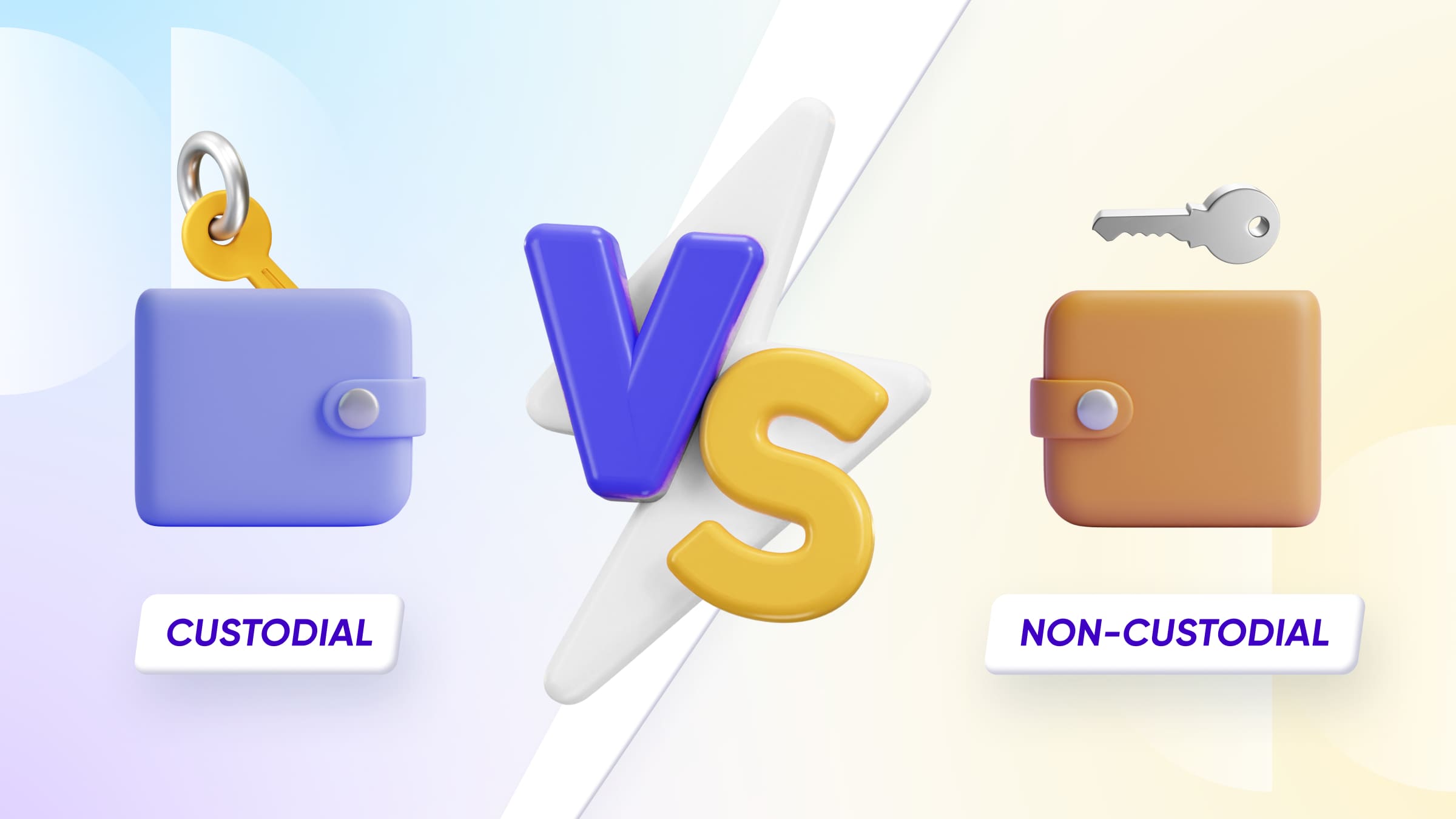
Custody defines who moves funds without the user's consent. The contract decides this as much as the cryptography, and four parameters show the real model.
MPC splits the key into shares held by several parties. If the provider and the platform together reach the signing threshold, the wallet is custodial regardless of the marketing label.
Key export is the most practical test. A provider that blocks it keeps control over the assets, whatever its documentation says about self-custody.
Recovery and contract terms complete the picture. An email link or a cloud backup share is also an attack path, and the terms of service state who may freeze or migrate a wallet.
Non-custodial embedded wallets meet three conditions: only the user signs, the key is exportable, and the provider restores nothing without a factor the user holds. A custodial model does not work for an unlicensed team. Under MiCA, holding client crypto in the EU requires CASP authorization.
Stablecoin Payment Flows for Platforms
USDT and USDC track the US dollar, so a seller who lists an item at $37.50 receives $37.50 minus fees. Five operations cover a typical platform:
- Receive. A transfer reaches a deposit address or arrives through checkout, and the platform credits the matching invoice after confirmations.
- Hold. Balances sit in each user's wallet or in a pooled wallet with an internal ledger. Pooling cuts gas costs. It also makes the platform liable for every user's funds.
- Transfer. A payment between two users stays in the ledger and settles instantly, unless the user needs an on-chain hash as proof.
- Pay. A purchase from the embedded wallet takes one or two taps. Gas sponsorship removes the need to buy TRX before sending 15 USDT.
- Withdraw. Funds leave for an external address or an exchange account after an allowlist check and AML screening of the destination.
The internal ledger and the on-chain balance drift apart after every failed transfer or duplicate webhook. We recommend a daily automated reconciliation. It catches a deposit credited twice before the user withdraws it.
What to Look for in an Embedded Wallet Provider
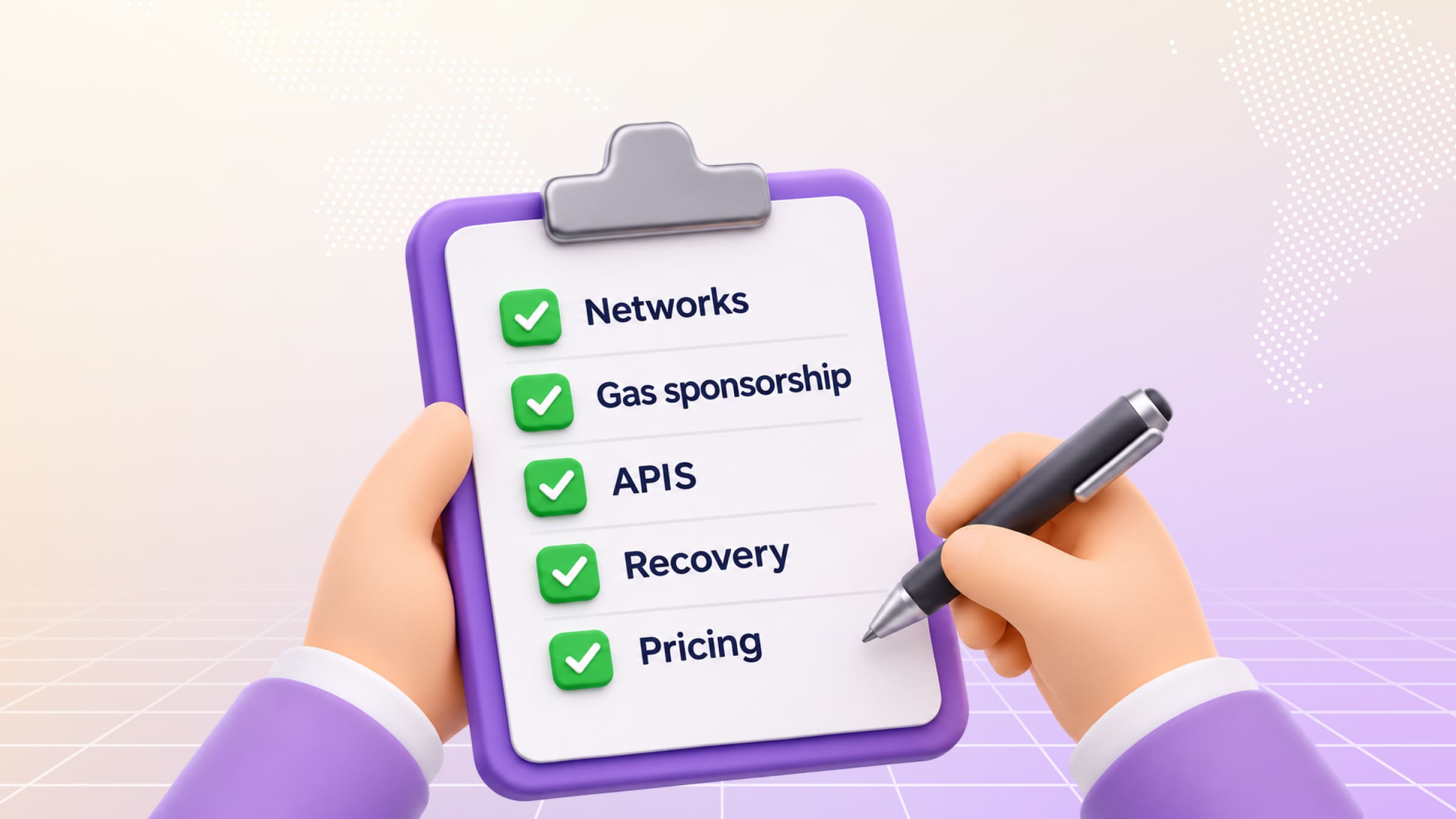
There is no universal best embedded wallet for stablecoin payments. A remittance app sending $180 to Latin America and a marketplace processing $4 tips rank the same five criteria differently:
- Networks. Tron and Ethereum come first for USDT. According to Cointelegraph, Tron's authorized USDT supply has overtaken Ethereum's.
- Gas sponsorship. Paymasters or fee delegation let users pay in USDT only. Tron runs on energy and bandwidth instead of EVM gas, and some vendors leave it out.
- APIs. Server-side wallet creation, a policy engine, and webhooks for every transaction state, including replaced.
- Recovery. Compare recovery factors and the time to restore access. If the platform triggers recovery without the user, the custody model changes.
- Pricing. Vendors bill per monthly active wallet or per signature. A platform with 48,000 dormant wallets pays very differently under these two models, and sponsored gas widens the gap.
On small payments, gas exceeds the payment itself on some networks, as the article on crypto micropayments shows. We recommend testing the fee model on real amounts before signing. The guide on choosing crypto processing applies similar logic to the processing layer.
Security and Compliance Controls
An embedded wallet moves the attack surface from the seed phrase to the login. Four controls limit what a signed-in session does:
- Permissions. A support agent sees balances and cannot initiate a transfer. Backend services sign only through predefined policies.
- Spending limits. Per-transaction and daily caps contain the damage from a hijacked session. Above the cap, the wallet asks for a passkey.
- Monitoring. AML/KYT screening runs on incoming and outgoing funds. A login from a new device followed by a withdrawal to a new address goes to manual review.
- Audit logs. Each transaction keeps an immutable record of request → approval → signature. Compliance exports it during an incident or a regulator's inquiry.
Three scenarios are tested before launch. A compromised account still hits limits and a 24–48 hour cooldown on new addresses. A stolen phone does not open recovery, because recovery needs a factor outside the device.
For a vendor outage, we recommend writing a key export procedure into the contract.
Integration and Launch Checklist
A launch starts with a pilot on limited volume, designed to trigger failure modes. Four areas need a tested result:
- Sandbox. Testnets plus 1–5 USDT on mainnet, because testnets do not reproduce real fee spikes or USDT address freezes by the issuer.
- Transaction states. Created → signed → broadcast → pending → confirmed, plus failed and replaced. Each state gets an interface message and a webhook.
- Idempotency. Every transfer request carries a unique key. After a timeout the backend retries, and the provider rejects the duplicate instead of sending funds twice.
- Support. Agents trace transactions by hash. A confirmed payment is irreversible, so crypto refunds run as new outgoing transfers.
We recommend agreeing on the exit strategy before signing: the export format for keys or shares and the migration of user records. An export drill on 10–20 test wallets shows whether these terms hold.
Choose the Custody Model Before the Vendor
Most vendors build embedded wallets on the same identity → keys → authorization → execution chain, so the decision rests on who signs and how the platform leaves the provider.
The next step is a two-week pilot with two shortlisted vendors and the same tests on both: a duplicate request, a lost-device recovery, and a full key export. Embedded wallets as a service that pass all three go to production with real limits.
FAQ (Frequently Asked Questions)
- Are embedded wallets always custodial? No. A wallet is non-custodial when only the user signs and the key is exportable. MPC alone does not settle the question.
- Can users export keys? That depends on the provider and on the platform's settings. Some vendors disable export or limit it to certain account types, so we recommend checking it on test wallets during the pilot.
- Is WaaS the same as an embedded wallet? No. Wallet-as-a-service is the infrastructure for keys, signing, and recovery. An embedded wallet is the interface a user sees inside the app.
- What makes a wallet suitable for stablecoin payments? Coverage of Tron and Ethereum plus gas sponsorship, so users never buy TRX or ETH to send USDT. Webhooks for every transaction state matter just as much.






Average rating: 5.0
Related articles


Read also


Join us
We tell about trends in the world of cryptocurrencies
and online payments.


